Growing eggplants in a greenhouse is incredibly rewarding. These Mediterranean beauties crave light and heat, and a greenhouse provides the perfect cozy environment for them to thrive. Here is everything you need to know to get a great harvest.
Prepping Your Garden Bed
Eggplants are heavy feeders and love soil rich in organic matter. If you’re a planner, planting a “green manure” cover crop the previous year—like peas or clover—is a game changer. These legumes naturally pump vital nitrogen back into the soil.
Don’t worry if you didn’t plant a cover crop, though! You can still prep your bed perfectly by mixing plenty of high-quality compost into the greenhouse soil. Adding some well-rotted manure is also a smart move. To top it off, mix in some horn meal or a similar slow-release organic fertilizer to keep the plants fed long-term.
Planting Time
If you’ve started your own seedlings indoors, you can move them into the greenhouse as early as late April or early May, provided the weather is cooperating. This is also when garden centers start stocking healthy starts.
- Dig a hole slightly larger than the current pot.
- Toss a handful of compost directly into the planting hole.
- Carefully remove the eggplant from its pot and place it in the hole.
- Fill it back up with soil, press down firmly to remove air pockets, and give it a good drink of water.
- Stick two or three garden stakes next to the plant now; you’ll need them later to tie up the heavy branches.
- Mulch the soil around the base with organic material or weed-free grass clippings to hold in moisture.
Ideal Growing Conditions
Eggplants are heat-seekers. They are happiest when the temperature stays consistently between 60°F and 77°F (15-25°C). However, they aren’t fans of high humidity. Since tomatoes have very similar needs, they make great greenhouse roommates.
Space your eggplant plants about 16 to 20 inches apart. Since both tomatoes and eggplants are members of the nightshade family, they can sometimes compete for the same nutrients or attract the same pests—so try to keep at least 24 inches of space between your eggplants and your tomato plants.
Care and Maintenance
Consistency is key when it comes to watering. Keep the soil evenly moist throughout the season. On hot days, make sure to vent the greenhouse to let fresh air circulate, but close the windows at night to trap the warmth. Try to ensure the temperature doesn’t dip below 60°F (15°C) overnight.
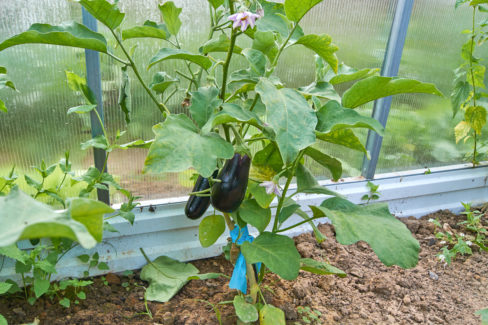
For the best results, train your plant to grow with only two or three main stems tied to your stakes or trellis lines. This keeps the heavy fruit off the ground. If you let too many stems grow, the plant gets too bushy, and you’ll end up with lots of tiny eggplants instead of big, beautiful ones.
Don’t be afraid to prune! Remove any oversized leaves or the foliage near the bottom of the plant. This improves airflow, which protects against blight and mold, and lets more sunlight reach the ripening fruit. If you run into trouble with whiteflies (a common eggplant pest), hang some yellow sticky traps. The color attracts them, and they get stuck, which also helps keep aphid populations in check.
Once you see your first ripe fruit in July, start feeding your plants every two weeks with an organic fertilizer. You can use a store-bought liquid fertilizer or whip up your own compost tea.
Pro Tip: Want to try companion planting? Peppers and cabbage make excellent neighbors for eggplants!