
Finding the perfect shrubs to frame your yard and create a natural boundary isn’t always a walk in the park. To help you out, I’ve rounded up the seven most popular hedge plants, plus a little “insider tip” for something extra special.
[[pflanzen]]
++Barberry (Berberis vulgaris)
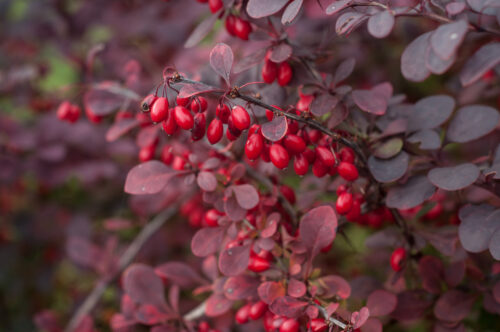
Barberry grows into a stunning flowering hedge that can handle just about anything—heat, drought, and even the tough conditions of urban gardening. The sharp thorns on its long branches act as a natural security system against unwanted guests. Pollinators absolutely love the nectar-rich flowers, which eventually turn into small berries that provide a vital food source for local birds.
++Arborvitae (Thuja)
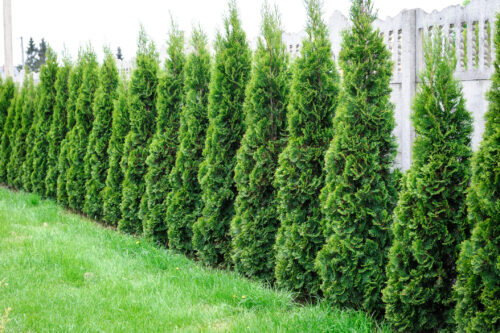
Arborvitae is a real powerhouse in the garden. These evergreens are incredibly hardy, standing tall against wind and frost without breaking a sweat. They’re known for their scale-like, flat leaves that release a lovely aromatic scent when crushed. While different varieties vary slightly in color and shape, they all prefer a sunny to partly shady spot where the soil stays consistently moist.
++European Hornbeam (Carpinus betulus)
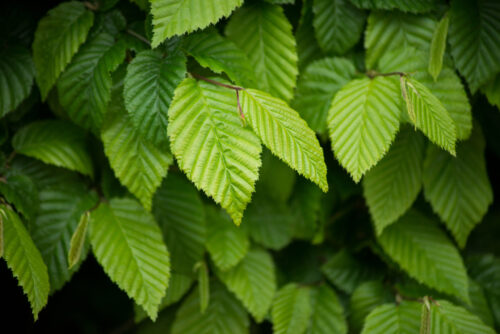
Hornbeam hedges are a fan favorite for a reason: their dense foliage makes for an excellent windbreak and privacy screen. Growing about a foot a year, they’ll reach your desired height in no time. They are frost-hardy and take very well to pruning. You can recognize them by their bright green, oval leaves with distinct ribs. In the fall, they turn a brilliant golden yellow, and while the leaves turn brown in winter, they usually hang onto the branches until the new buds push them off in the spring.
++Privet (Ligustrum)
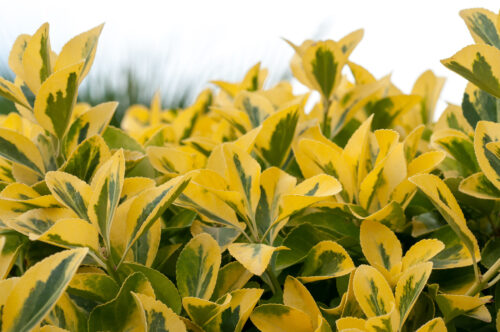
Robust and reliable, Privet has been a staple in formal gardens for centuries. Thanks to its dense branching and leathery leaves, it creates a wall of green that is completely opaque. In the fall, the foliage often takes on a beautiful purple hue. The creamy white flowers that appear in June and July smell amazing and are a magnet for butterflies. The small, shiny black berries that follow were once used to make ink and now serve as a great winter snack for birds.
++Common Hawthorn (Crataegus monogyna)
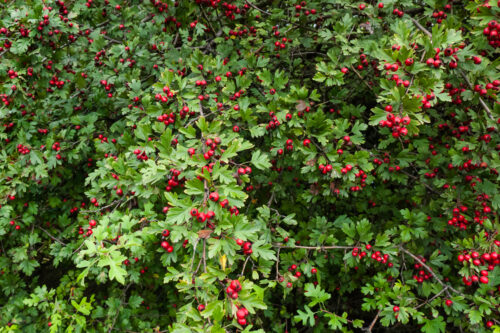
If you want a hedge that’s as eco-friendly as it is pretty, Hawthorn is the way to go. In the spring, its clusters of white blossoms attract over a hundred species of butterflies. Later, the red, egg-shaped fruits provide a feast for birds and small mammals. It’s a low-maintenance choice that thrives in sun or partial shade and provides a safe nesting spot for local wildlife.
++English Yew (Taxus baccata)
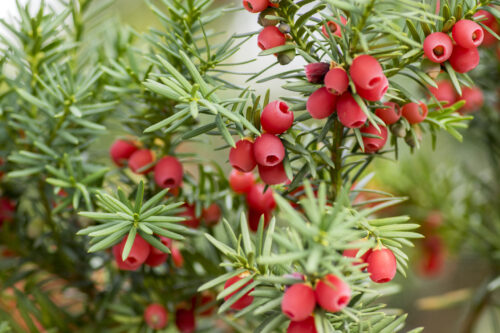
Yews are the gold standard for formal hedging and topiary. Their fine, dark green needles stay lush all year round, creating a very natural-looking privacy screen. The Yew is easy to care for and is one of the few evergreens that grows well in both full sun and deep shade. Just make sure the soil drains well, as they don’t like “wet feet.” One heads-up: Yew is highly toxic, so it might not be the best choice if you have curious toddlers or pets.
++Cherry Laurel (Prunus laurocerasus)
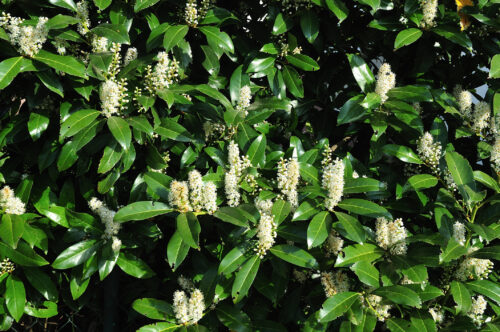
Cherry Laurel has skyrocketed in popularity because it’s so easy to maintain and handles dry spells like a pro. Its large, glossy evergreen leaves provide total privacy even in the dead of winter. From May to June, the Cherry Laurel produces upright white flower spikes that smell wonderful, followed by small black stone fruits.
%%Firethorn (Pyracantha coccinea)
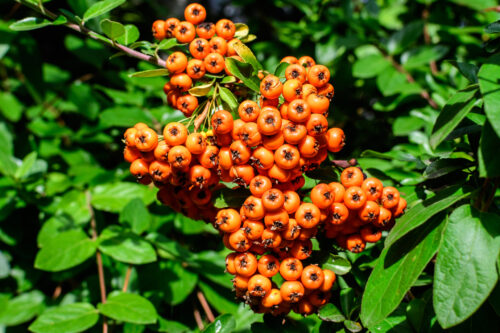
Firethorn is my top “secret tip” for a show-stopping hedge. Its long, sharp thorns make it a virtually impenetrable barrier. It features dark green foliage and a massive display of white flowers in late spring. But the real show starts later when it produces a bounty of yellow to bright red berries that stick around well into winter. While the berries aren’t toxic, they are very tart—which means birds usually leave them alone until the very end of winter, keeping your garden colorful for longer!