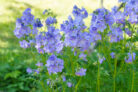
If you’re growing perennial flowers in your garden, you’re always keeping one eye on the summer heat and the other on the winter chill. With its delicate, light blue blossoms, Jacob’s Ladder (also known as Greek Valerian) looks like a fragile little thing. But don’t let those dainty flowers fool you—this wild perennial is surprisingly tough. In fact, it can handle temperatures dropping way below zero without breaking a sweat.
Jacob’s Ladder is a Frost-Fighting Champ
In the wild, Jacob’s Ladder pops up in damp meadows, floodplains, and even mountainous regions. Nobody is out there tucking it in with a blanket during the fall, yet it survives just fine. Experts confirm what nature already knows: this plant is incredibly cold-hardy. It can actually tolerate temperatures as low as -45°F. That means no matter where you live in the States, this plant can likely call your garden home.
Choosing the Right Spot in Your Flower Bed
Since Jacob’s Ladder (*Polemonium caeruleum*) is such a winter warrior, you don’t really need to worry about its location in terms of surviving the freeze. Theoretically, you could plant it almost anywhere. But hold on—don’t grab that shovel just yet! There’s no point in having a plant that survives the winter if it looks sad and barely blooms in the summer. To keep it happy, look for a spot with these features:
- Full sun to partial shade
- Rich, organic soil (lots of humus!)
- Moist, fresh, and well-draining soil
- Avoid areas prone to standing water or extreme drought
Winter Care for In-Ground Plants
If your Jacob’s Ladder is planted directly in the garden, it doesn’t need any special winter protection. That said, it always appreciates a spot that’s a bit shielded from harsh winds. In the fall, or just before winter hits, go ahead and cut the plant back to just above ground level. This helps prevent fungal diseases from moving in. Also, if you have a dry spell on frost-free days, give it a little drink of water.
Overwintering Jacob’s Ladder in Pots
When grown in containers, this plant shows a slightly more sensitive side. If possible, move your potted Jacob’s Ladder into a frost-free area (like a garage or shed) before the first hard freeze, and keep it there until late April or early May. If you don’t have an indoor spot, you’ll need to bundle it up outside. Wrap the pot in plenty of burlap, fleece, or bubble wrap, and lift it off the cold ground by placing it on a piece of wood or Styrofoam. A thick layer of straw or dried leaves on top of the soil will help keep the root ball cozy.
Pro Tip:
Jacob’s Ladder is an early riser in the spring. Make sure to remove all that winter protection as soon as the temperatures stay above freezing. If you leave it wrapped up while the sun is shining, condensation can build up inside and lead to rot.