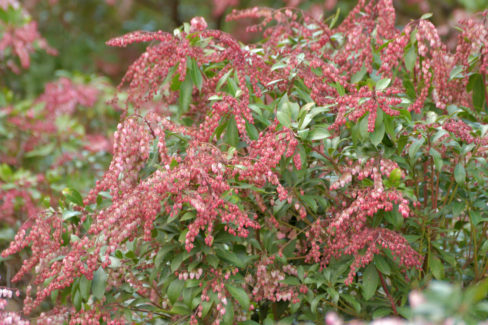
Whether you’re planting directly in the ground or sticking with containers, most of us gardeners make that choice based on one big question: “Will it survive the winter?”
The Lily of the Valley Shrub (also known as *Pieris japonica*) is a versatile beauty that does great in both garden beds and pots. But where is it actually safest when the temperature drops? Should you let it brave the elements outside, or keep it mobile so you can lug it indoors? Let’s break it down.
These beauties can handle a serious chill
When planted in the ground, Lily of the Valley shrubs are surprisingly tough, handling temperatures as low as -10°F (-23°C). That makes them officially winter-hardy in most regions. However, there’s a catch: frost damage usually happens when extreme cold meets bright, intense winter sun. This combo can zap those brand-new buds, meaning you’ll miss out on those gorgeous spring blooms.
Yes, plants need “sunscreen” too
It sounds a little backwards, but you actually want to protect your *Pieris* from the sun during the winter. To keep those buds safe, cover the plant with some evergreen brush or a layer of dry leaves. Just be careful not to crush the delicate buds! Come February, you can take the protection off to let the plant start waking up for spring.
Prepping your Lily of the Valley Shrub for winter
If your shrub is looking a little wild, you can give it a light trim in July (after it finishes blooming) or in the fall. Focus on removing dead wood or thinning out areas that are getting too crowded. If you skip this, the center of the plant can become “leggy” or bare because light can’t reach the main stem. Just don’t go overboard—keep the pruning moderate.
Pro Tip: A simple pair of hand pruners is all you need here. No need to break out the heavy-duty power tools!
Winter maintenance
Don’t put your watering can away just yet! Since these are evergreens, they still need moisture throughout the winter. On days when the ground isn’t frozen, give them a drink to make sure the soil doesn’t completely dry out.
Container plants need a little extra love
Unfortunately, the natural winter hardiness of these shrubs drops significantly when they’re in pots. Since the roots aren’t insulated by the ground, they’re much more vulnerable. But don’t worry, you can easily winter-proof your patio pots with a few steps:
- Give long shoots a very light trim.
- Wrap the pot in burlap, fleece, or even bubble wrap to insulate the roots.
- Elevate the pot off the cold ground by placing it on a wooden board or a piece of styrofoam.
- If possible, move the pot to a sheltered spot away from direct winter sun and harsh winds.
Pro Tip: Keep an eye on the variety you have. While most are hardy, the *Pieris formosana* (often labeled as *Pieris forrestii*) is a bit more sensitive. If you have that specific variety, it’s actually safer to bring it indoors to a cool, bright room for the winter.