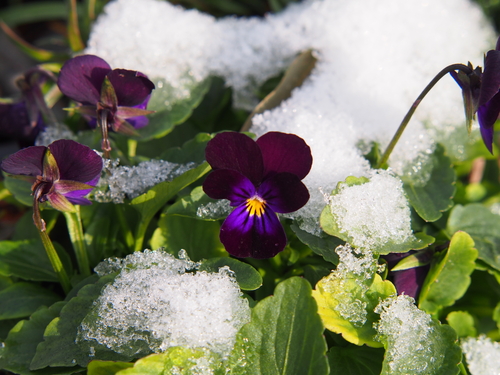
A little bit of frost won’t hurt your pansies! These cheerful little flowers are actually quite frost-resistant and hardy. However, long stretches of extreme cold can take a toll, so they do appreciate a little protection during the winter months. If you’re growing them in pots, frost protection is a must.
Are pansies frost-hardy?
Whether they are biennial or perennial, pansies are native to temperate climates and handle frost in the garden quite well. Interestingly, homegrown pansies tend to be much tougher than the ones you pick up at the store. If you’re looking for the ultimate winter warriors, wild pansies and Johnny Jump-ups (violas) are known for being especially hardy.
Pansies are also great at handling “moody” weather that fluctuates between freezing and thawing. They’ll simply close up their blooms when it gets too chilly and pop them right back open as soon as temperatures rise. The only real danger is a “black frost”—a long period of freezing temperatures without any snow cover.
It’s a different story for plants in containers or window boxes. These always need a little help getting through the winter because their roots are much more exposed and can freeze easily. That said, even for pansies planted in the ground, a little extra protection never hurts.
How do you protect pansies from the cold?
If your pansies are in a garden bed, a simple protective layer is usually enough. It’s also a good idea to make sure their spot is somewhat sheltered from heavy rain, and don’t forget to give them a little water on frost-free days if the soil is dry. You can use these materials for mulching:
- Dried leaves
- Bark mulch
- Evergreen brush/twigs
- Straw
- Garden fleece
For balcony boxes, you should wrap the container itself in garden fleece or burlap to insulate the roots. If the weather gets truly brutal, you might move them to a sheltered but cool spot, like an unheated sunroom, a basement with a window, or a garden shed.
What are the biggest winter challenges?
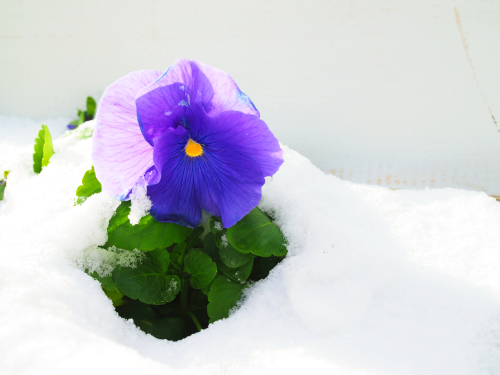
Believe it or not, pansies actually prefer being covered in snow! The snow acts as an insulator and protects them from the winter sun, which can actually dry the plants out. The biggest threat is actually “wet feet.” If the soil is too soggy and then freezes solid, the root ball turns into an ice cube, preventing the plant from taking up any water.