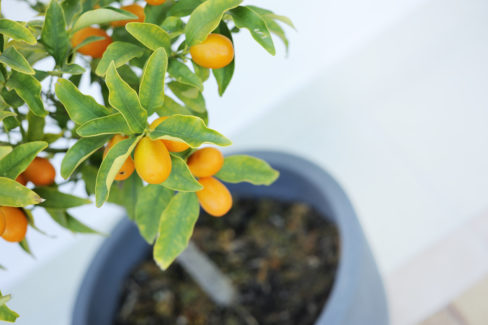
Most folks grow Kumquats in pots or containers, and for good reason—it makes moving them indoors for the winter a total breeze! However, container gardening comes with its own set of rules compared to planting directly in the ground. Here’s everything you need to know to keep your little citrus tree happy.
The Perfect Spot
Even though your Kumquat is mobile, picking the right “home base” for both summer and winter is key. During the summer, these sun-loving plants crave warmth. You’ll want to find a sunny, cozy spot that’s protected from harsh drafts. A south-facing brick wall is the gold standard; the wall soaks up the sun’s heat all day and slowly radiates it back to the plant at night.
When winter rolls around, move your tree to a bright, frost-free area. To keep it in top shape while overwintering, try to keep the temperature between 40°F and 50°F (5-10°C).
The Right Soil
Kumquats love soil that’s rich in nutrients but drains well. For a potted setup, a mix of about one-third quartz sand and two-thirds high-quality humus works wonders.
The biggest “no-no” for container citrus is soggy feet (standing water). To prevent root rot, always start with a solid drainage layer of expanded clay pebbles at the very bottom of your pot.
Choosing a Pot Size
Left to their own devices, Kumquats can reach heights of up to six feet! Of course, if you keep up with regular pruning, you can easily manage their size.
To save yourself from the hassle of constant repotting, choose a container that is at least twice the size of the current root ball. This gives your tree enough “leg room” to stay put for at least three years. Also, make sure the pot is deep enough to accommodate their root structure.
How to Plant Your Kumquat
When it’s time to plant, gently slide the tree out of its old container. Give the root ball a little massage to loosen things up. Don’t be afraid to trim away any very old or mushy roots—this actually encourages the growth of fresh, young roots that are much better at soaking up nutrients. Plus, clearing out the old gunk helps prevent mold and rot.
Start by adding about an inch of drainage material to the bottom of the new pot. Add a layer of your soil mix, center the Kumquat, and fill in the gaps with more soil. Just be sure to leave an inch or two of space at the top (a “watering rim”) so water doesn’t spill over the sides when you’re giving it a drink.
Generally, spring or fall is the best time for planting. If you do it then, it’s also the perfect opportunity to give the branches a quick trim to encourage bushy new growth!