Trailing geraniums are hands down one of the best ways to level up your curb appeal. There’s nothing quite like a lush, overflowing wall of color hanging from a balcony or porch. While you could head to the garden center and buy a flat of them, you don’t actually have to! Propagating these beauties yourself is surprisingly easy, even for beginners—and it’s a total win for your gardening budget.
Propagation via Cuttings vs. Seeds
To go the cutting route, you’ll need a healthy “mother plant” to start with. If you prefer starting from scratch, most trailing geranium varieties produce viable seeds if you let a few flowers mature. You can also find seeds online or at your local nursery for a great price. Both methods work well, but here’s a pro tip: propagating from cuttings ensures your new plants are exact clones of the original. If you have a specific color or variety you’re obsessed with, cuttings are the way to go.
Quick Note:
If you have a massive, well-established geranium that’s several years old, you can propagate it by dividing the root ball. However, if you’re looking to create a whole bunch of new plants at once, seeds or cuttings are much more efficient.
How to Propagate from Cuttings
Trailing geraniums (technically *Pelargoniums*) are best propagated in late summer. By then, the stems have reached the perfect “ripeness”—they aren’t too soft (which leads to rot) but aren’t too woody to grow roots.
- Take your cuttings between July and mid-September.
- Look for semi-ripe stems about 4 inches long without flower buds.
- Strip off the lower leaves, leaving only 2 to 4 leaves at the very top.
- Let the cuttings air-dry for about two hours to “callus” over.
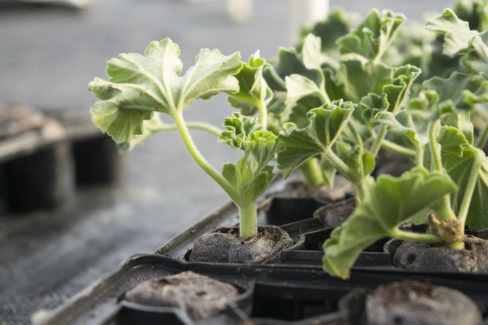
- Plant them about an inch deep in a mix of seed-starting soil and sand.
- Ideally, give each cutting its own small pot.
- If you’re sharing a pot, make sure the cuttings aren’t touching each other.
- Place them in a bright spot (at least 68°F), but keep them out of direct, scorching sunlight.
- Keep the soil consistently moist but not soggy.
- Cover with a clear plastic bag to create a mini-greenhouse effect (just remember to vent it daily!).
- Once you see new leaf growth, it’s time to repot them into their own permanent homes.
Pro Tip:
Since you’re starting these in late summer, winter will be here before you know it. These young plants will need to overwinter indoors in a cool, bright spot until spring.
Growing from Seed
If you want to start from geranium seeds, you’ll want to get a head start indoors around February. Since it’s still freezing outside, starting early ensures your plants are strong enough to bloom as soon as they move outdoors in the spring.
- Use a high-quality seed-starting mix or potting soil.
- Barely cover the seeds with a light dusting of soil.
- Keep the soil evenly moist.
- Use a seed tray with a clear lid or some plastic wrap to keep the humidity up.
- Lift the cover daily to let in fresh air.
- Once they sprout and grow a bit, move them to individual pots in a bright, moderately cool room.
- Starting in late April, begin “hardening them off” by taking them outside during the day and bringing them back in at night.
Wait until the danger of frost has completely passed—usually around mid-May—before you officially plant your trailing geraniums in their outdoor containers.