If you want your geraniums to show off with those lush, vibrant blooms we all love, you can’t skip out on repotting. To keep them happy, every geranium parent needs to know exactly when it’s time for a soil refresh and whether the plant has outgrown its current home. If you’re not quite sure where to start, I’ve got you covered with everything you need to know below.
When should you repot a geranium?
Geraniums (which are technically *Pelargoniums* originating from South Africa) usually live in window boxes or pots with a limited amount of soil. Because they are “heavy feeders”—meaning they gobble up nutrients fast—they can exhaust their soil pretty quickly. As a general rule of thumb, you should give them fresh soil every two years.
If you’re growing your own geraniums from cuttings or seeds, you’ll start them in small starter pots. As soon as those roots have filled the pot, it’s time to move them up so they have room to stretch and grow.
Even if you just bought a new plant from the garden center, you’ll likely need to repot it right away. Most store-bought geraniums come in tiny plastic pots that are already root-bound by the time you get them home.
When is the best time to repot?
For established plants that have overwintered in their containers, the sweet spot for repotting is spring—anytime from late February through April. This is also when you’d pot up geraniums that overwintered bare-root. Just remember: keep them indoors in a bright, protected spot until the threat of frost has passed (usually around mid-May) so those first delicate leaves can sprout safely.
For new purchases or fresh starts, repot whenever the roots tell you they’re cramped. While spring is ideal, geraniums are pretty hardy and can technically be repotted year-round if necessary.
Does my geranium always need a bigger pot?
Geraniums are actually pretty chill about living in tight quarters. You can see this by how well they thrive when packed together in a window box! Because of this, mature plants usually just need a soil swap—you can clean the old pot and put them right back in. However, young starts and nursery plants are a different story; they definitely need a larger pot that can accommodate all the growth they’re about to do during the summer.
Pro Tip:
Geraniums grow incredibly fast. While that first starter pot can be small, make sure the second pot is “adult-sized.” This saves you from having to disturb the plant every few weeks just to give it more room.
Should I prune the plant before repotting?
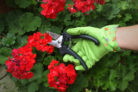
Even if you gave them a heavy haircut before winter, you’ll want to do a little pruning again before repotting:
- Remove any thin, leggy “winter growth.”
- Snip off any dead or diseased parts.
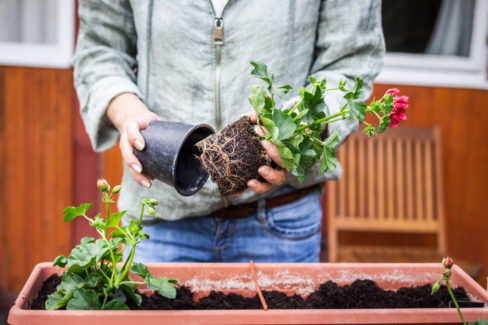
- Gently loosen the root ball with your hands to help the roots spread into the new soil.
- Trim away any thin, mushy, or dead roots.
- Give the healthy roots a light trim to encourage new growth.
A few more tips for successful repotting:
- Always use pots with drainage holes—geraniums hate “wet feet.”
- Use a high-quality geranium potting mix.
- Alternatively, use standard potting soil enriched with compost or horn shavings.
- If the soil seems heavy, mix in some sand for better aeration.
- Always add a drainage layer (like pebbles or clay shards) at the bottom.
- Give them a good soak right after repotting.
- Wait about 4 to 6 weeks before you start your fertilizing routine, as new soil usually has enough nutrients to get them started.