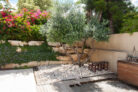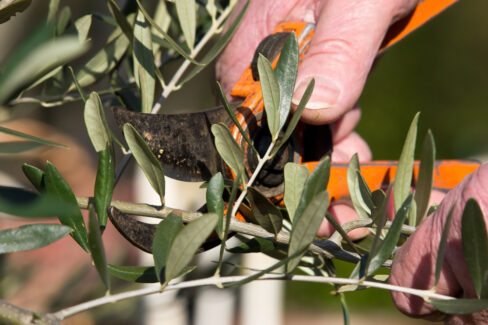
When it comes to pruning olive trees, there isn’t a one-size-fits-all approach. The technique you choose really depends on what you want for your tree. Are you looking for a beautiful ornamental centerpiece for your patio, or are you hoping to harvest your own olives for the kitchen? Your goals will dictate how you pick up the shears.
Timing is Everything
It’s not just about *how* you prune, but *when*. The good news is that olive trees are incredibly hardy—it’s actually pretty tough to “ruin” one with a bad cut. Even a radical hack-job at the wrong time of year usually won’t kill these tough plants. However, if you want your tree to truly thrive, try to stick to this schedule:
- Topiary/Shape Pruning: Early spring, just before moving them back outside.
- Maintenance Pruning: Late June.
- Training (Structural) Pruning: Right after the first flowering period.
- Fruiting Wood Pruning: Every two years in February.
- Rejuvenation Pruning: January to February.
Training a Productive Canopy
If you’re dreaming of a big harvest, you’ll want to focus on building a strong framework. Here’s how to train your tree for maximum fruit:
- Pick about five main “leader” branches that are roughly the same strength.
- Ideally, these should sit on the trunk at a height between 40 and 60 inches (100–150 cm).
- Every year, let these leaders grow by about 4 inches (10 cm) by trimming back the previous year’s growth to that length.
- Always make your cut just above an outward-facing bud to encourage the tree to grow “open” rather than “cluttered.”
Fixing Late Frost Damage
Olive trees can have a rough time overwintering. This happens whether they are wrapped up outside or kept in pots and moved back out after a winter that was a bit too warm. If you see frost damage, wait until late June (around the summer solstice) to fix it. Cut back any frozen, dead shoots until you hit healthy wood. Alternatively, you can trim them back to 1-inch stubs. This opens up the center of the tree and gives the healthy inner shoots the light they need to develop.
Encouraging Fruit Growth
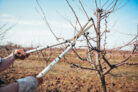
For mature trees, a “fruiting wood” prune every two years works wonders. First, clear out any dead wood or branches growing toward the center of the tree. Next, take the branches that already bore fruit and cut them back to 1-inch stubs. Leave the shoots from the previous year alone—those are your fruit-bearers for the coming season! If a last-year shoot is way too long, you can tip it back slightly, but don’t remove more than a third of it, and always cut back to an outward-facing bud.
Giving Old Trees a Makeover
You can actually “reset” an older olive tree through rejuvenation pruning. The best time for this is late February or early March. Use a saw to cut the main leader branches about 20 to 30 inches away from the trunk. Just a heads-up: check for any critters nesting in the branches before you start! After a heavy cut like this, give the tree some nitrogen-rich fertilizer to jumpstart its new growth.
Common Pruning Mistakes
While olive trees are forgiving, a few common slip-ups can cause issues down the road:
- No pruning at all: The tree will eventually go “bald” in the center. (Fix: Prune at least every two years).
- Skipping the training phase: The canopy gets too dense, which means no sunlight for flowers or fruit. (Fix: Train the tree into a “bowl” or “plate” shape).
- Ignoring leggy shoots: This leads to irregular growth and awkward gaps. (Fix: Redirect long shoots by pruning back to an inward-facing branch).