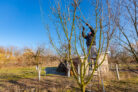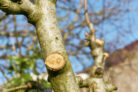
Taking care of a young apple tree is a labor of love, especially during those first five to ten years. If you nail the initial planting and training cuts, your future self will thank you—eventually, you’ll only need to do some light thinning to keep the tree happy.
The Training Phase: Setting the Foundation
Every fruit tree has its own timeline for “growing up.” For stone fruits and dwarf apple varieties, the training phase usually lasts four to six years. If you’re growing full-sized, vigorous apple trees, expect it to take about six to ten years. Getting the crown shape right during this window is crucial, so you’ll want to avoid any major hacks. Once your tree is in the ground and you’ve finished the initial planting cut, it’s time to focus on training cuts over the next few seasons.
Moving from Planting Cuts to Training Cuts
During the initial planting cut, you likely narrowed the tree down to one central leader and two to four main structural branches (scaffold branches). You removed any “competitor” shoots and headed back those main branches by about two-thirds to keep them level. You’ll follow a similar rhythm in the coming years until the tree’s framework is solid. As the tree matures, you won’t need to prune quite as aggressively. Starting in the second year, you’ll also need to start managing the side growth popping up on those main branches.
Summer Pruning: Keeping Things in Check
When midsummer rolls around, it’s time to clear out any “competitor” shoots or upright water sprouts growing toward the center of the tree. You can also use spreaders, coconut fiber ties, or stakes to train and shape the branches into the right position.
Don’t forget to trim back the side shoots: shorten the ones near the top of the tree to about 4–6 buds, and the ones lower down to about 6–10 buds. Just be careful not to snip off any actual fruiting spurs! If you see very strong shoots growing near the central leader, it’s usually best to remove them—unless, of course, you’re planning to turn one into a new main branch.
The Winter Pruning Routine
In the winter, take a look at the growth that sprouted from those side shoots you trimmed earlier. You’ll want to cut these back to a horizontal, outward-facing bud to encourage the tree to grow “out” rather than “up and in.”
Developing Secondary Branches
By the third or fourth year, you can start turning strong side shoots into secondary branches. Use the previous year’s growth on the main branch as your guide. Look for outward-growing shoots to develop into these secondary limbs, and avoid anything growing sideways or crossing over the main branch.
Keep these tips in mind:
- Space your side branches about 24 to 32 inches (60–80 cm) apart.
- Continue developing new main branches out from the central leader.
- Encourage weaker shoots to become fruiting wood.
- If you have extra shoots, don’t feel like you have to cut them all—you can tie some down horizontally to encourage them to grow fruit instead of just leaves.