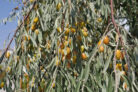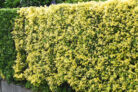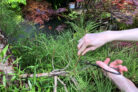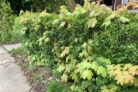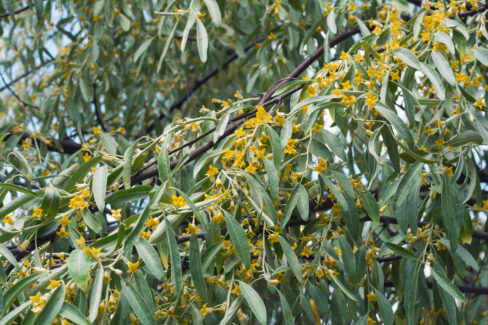
Silverberries (Oleaster) are incredibly tough, resilient plants. In the wild, they get along just fine without any help from us, but in a garden setting, a little grooming goes a long way. Whether or not you need to grab your shears really depends on the look you’re going for.
Choosing Your Style
Most gardeners love Silverberries because they bring a touch of Mediterranean flair to the yard. Even though they’re actually native to East Asia, their shimmering foliage looks remarkably like olive trees. Usually, you’ll see them grown in one of three ways:
- As a privacy hedge
- As a topiary or “standard” (tree-form)
- As a standalone focal point (solitary shrub)
How to Prune Like a Pro
You’ll also occasionally see Silverberries brightening up patios in large containers. Regardless of where yours is planted, you’ll need to do some occasional shaping to keep it looking its best. This is especially important for young plants; you want to “train” them early on to grow in the right direction.
Silverberries tend to send out long, whip-like shoots. By trimming these back, you encourage the plant to branch out more. This is the secret to getting a thick, dense hedge that blocks out the neighbors, or a lush, full canopy if you’re growing it as a small tree.
Training a “Standard” or Tree-Form
If you want that classic “tree look” (known as a high-standard), it takes a little extra patience. Start by picking out the strongest, straightest vertical shoot to be your main trunk. Prune away the competing branches, leaving just a few small sprigs for now, and stake that main stem securely. This gives the plant the support it needs to grow tall and straight.
As it grows, keep stripping away any new side shoots that pop up along the “trunk.” Meanwhile, keep pinching back the growth at the very top. This forces the plant to bush out at the summit, eventually creating a beautiful, dense crown.