Growing your own sweet potatoes is surprisingly easy and honestly, a lot of fun! These leafy vines aren’t just for the veggie patch; they look gorgeous in containers, too. If you want to multiply your harvest of these exotic root veggies, you’ve got a few different ways to go about it.
Starting in the Fall
Believe it or not, you can actually start next year’s crop while you’re harvesting your current sweet potatoes in the fall. Just take some cuttings from the vines and pop them in a glass of water to root. Make sure at least one leaf node (the spot where the leaf meets the stem) is submerged, because that’s where the magic happens and roots sprout. Aim for a cutting that’s about 8 inches long.
Once those roots are a few millimeters long, move them into small pots. Keep your baby sweet potatoes in a bright, cool spot over the winter. If they start getting a bit “leggy” or long during their indoor stay, just trim them back—you can even use those trimmings to start even more cuttings!
Growing Slips from the Tuber
If you don’t want to babysit plants all winter, you can start fresh from the tuber (the rhizome) in February. This gives you plenty of time to get strong young plants ready for the garden by mid-May. A common rookie mistake is planting the whole sweet potato directly in the ground. Don’t do that! You’ll get a much smaller harvest because the plant doesn’t feel the need to grow new storage roots. Instead, you want to grow “slips.”
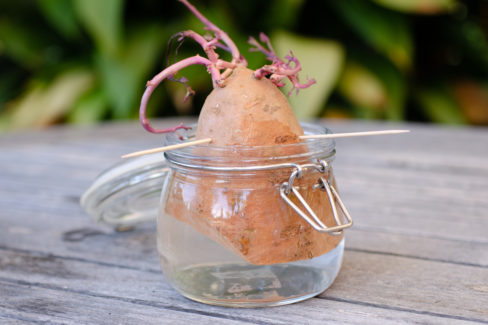
There are two easy ways to get slips from a tuber. The classic method is the water jar: stick the sweet potato in a glass of water with just the top poking out. Keep it somewhere warm to wake it up. Once those shoots have sprouted, carefully wiggle them off and plant them in soil.
Alternatively, you can sprout them directly in dirt. Bury a sweet potato in a pot of soil and water it sparingly (you don’t want it to rot!). Once shoots appear, gently dig it up and detach the slips. The benefit here? Slips started in soil usually develop much stronger, healthier root systems than those started in water.
Care and Planting Out
The best part about DIY sweet potato starts is that you can grow as many as you want! By the time they’re ready to go outside, they should be about 6 to 8 inches tall and nice and bushy. If they get too long, just give them a haircut. For the soil, don’t go too heavy on the fertilizer yet. Mix some lean seed-starting mix with your potting soil; this encourages the plant to go searching for nutrients, which leads to better root development (and bigger sweet potatoes later!).
Wait until mid-May (after the last frost) to move them outdoors. You don’t need a massive garden plot, either—sweet potatoes do great in containers or raised beds. Just make sure the soil is nice and loose so those tasty tubers have plenty of room to stretch out and grow!