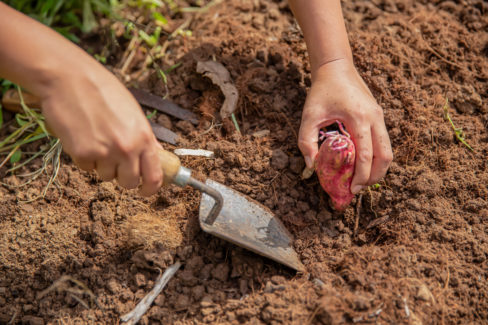
Sweet potatoes aren’t just a low-maintenance addition to your garden; they’re also incredibly easy to propagate! That said, I see gardeners making the same few mistakes every year that end up shrinking their harvest. If you want a bumper crop of delicious tubers, follow these tips to get your plants started the right way.
Propagating from Cuttings
The most popular method—and the one the pros use—is growing from cuttings. To do this, you’ll actually want to take your cuttings in the fall and overwinter them as young plants.
Right around harvest time in the autumn, snip off some vines about 8 inches long. Strip the leaves off the bottom half and pop them into a glass of water. Make sure at least one “node” (the spot where the leaf meets the stem) is submerged, as that’s where the new roots will sprout. Once you see some healthy little roots, transplant the cuttings into a pot with some decent potting soil.
During the winter, keep your baby plants in a bright spot that stays cool—ideally around 50°F (10°C). Try not to let it get warmer than 60°F (15°C), or they’ll start growing like crazy! If they do get a bit wild and leggy in their winter home, don’t worry—you can just trim them back and use those trimmings to start even more cuttings.
Sprouting (Slips)
Here is where a lot of folks get tripped up: they try to plant a whole sweet potato from last year’s harvest directly into the ground. We do this with regular potatoes all the time, but sweet potatoes are a different beast! If you plant the whole tuber, the plant focuses its energy in the wrong place, and you’ll end up with a much smaller harvest.
Instead, we use the tuber just to get sprouts started (often called “slips”), which we then detach and plant on their own. One classic way to do this is the “toothpick method”—stick the tuber in a jar of water so the bottom third is submerged.
Alternatively, starting in February, you can lay a tuber in a tray of moist soil. Once the sprouts are about 4 inches long, gently dig up the tuber and snap the sprouts off. The best part about the soil method? The sprouts usually already have a great head start on their root systems.
Growing from Seed
Technically, you *can* grow sweet potatoes from seeds, but honestly? It’s a huge hassle. The success rate is way lower than using cuttings or slips, and it takes much longer.
The other downside to seeds is the “mystery factor.” Because seeds involve genetic info from two different parent plants, you never quite know what you’re going to get. When you grow from cuttings or slips, you’re getting a genetic clone of the mother plant. That means if you loved the color and flavor of last year’s crop, you’re guaranteed to get that exact same deliciousness again this year!