If you’ve ever wondered how to get those stunning blue blooms on your hydrangeas, it all comes down to a little bit of soil science. When your soil hits a specific acidity level and there’s aluminum sulfate present, your hydrangea can transform into a blue beauty. Here are my favorite tips and tricks to help you prep your soil and turn those petals blue.
Not Every Variety Can Turn Blue
First things first: not every hydrangea is capable of changing color. To get that blue hue, you need the right starting point. Generally, most Mophead (Bigleaf) and Lacecap hydrangeas are the ones that can make the switch. Even the popular Endless Summer variety is a great candidate for a blue makeover. However, if you’re starting with a variety that is naturally deep red or a very intense dark pink, you might be out of luck—those usually won’t budge.
Acidic Soil is the Secret Sauce
The magic happens when a hydrangea can absorb aluminum sulfate from the ground. But here’s the catch: the plant can only “eat” that aluminum if the soil pH drops below 4.5. Since most backyard garden soil isn’t naturally that acidic, you’ll need to give it a little nudge.
Here’s how to get started:
- When planting, use specialized hydrangea soil or rhododendron potting mix.
- Grab a simple pH test kit from your local garden center to see where your soil currently stands.
- Mix in some leaf compost to help naturally lower the pH over time.
- A little DIY trick? Watering with a very diluted vinegar solution can also help lower the pH level.
Maintenance and Care Tips
When you’re aiming for blue, you have to watch out for lime. Lime makes soil more alkaline (the opposite of what we want), so avoid planting your blue-hopefuls in high-lime areas. You’ll also want to be picky about your fertilizer—stay away from anything with a high lime content.
Don’t forget about your watering routine! Tap water can often be “hard” (full of lime/calcium), which can slowly change your soil pH back. Whenever possible, use rainwater to water your hydrangeas. If you have to use the hose, let the water sit in a watering can for a few days before using it to help minimize the lime impact.
How Long Does the Color Change Take?
Patience is key here! Don’t expect an overnight transformation. Depending on how much you need to change your soil chemistry, it can take up to two years to see that deep, true blue.
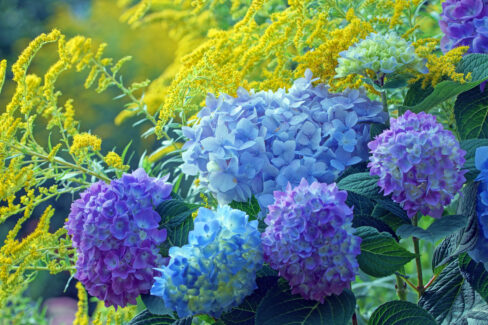
The good news? The “in-between” phase is actually pretty cool. You’ll likely see some gorgeous antique shades, purples, or even multi-colored blooms on the same bush while the plant transitions. Stick with it, and your hydrangea will reward you with spectacular colors during its blooming season.