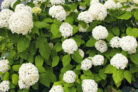
Sure, you can easily pick up a young ‘Endless Summer’ hydrangea at your local garden center, but where’s the fun in that? If you’ve already got one of these beauties in your yard, you can actually propagate it yourself. With a little patience and the right technique, you’ll have a whole new batch of plants ready to fill out your garden beds in no time.
Propagating with Cuttings
Since the ‘Endless Summer’ hydrangea is a variety of the classic bigleaf hydrangea (Hydrangea macrophylla), it’s actually pretty easy to grow from cuttings. The best time to do this is during June or July. When you’re ready to prune your hydrangea for cuttings, look for healthy shoots that don’t have any flower buds on them. Once you’ve got your stems, you can get those roots growing!
Here’s how to root them in a glass of water:
- Grab a glass or jar and fill it with fresh water.
- (Optional tip) Cover the top with plastic wrap and poke holes for the stems to keep them upright.
- Cut your bud-free stems to about 8 inches long.
- Strip off the leaves from the bottom half of the cutting.
- Leave just two leaves at the very top.
- Place the cuttings into the water.
- Keep an eye on them until you see roots sprouting from the bottom.
- Once the roots look nice and sturdy, you can pot the cuttings up in soil.
If you’d rather skip the water step, you can go straight into the dirt. Just dip the bottom of your cuttings into some rooting hormone first. Stick them into a pot filled with seed-starting mix and keep them in a warm spot. Make sure the soil stays consistently moist, and soon enough, you’ll see new little leaves and roots starting to develop.
Propagating via Layering
Another great way to get more ‘Endless Summer’ hydrangeas is through a method called “layering.” For this, you’ll need a healthy, flexible branch that hasn’t flowered yet. Strip off all the leaves except for a couple at the very tip. Gently bend the branch down to the ground. Where the branch touches the soil, make a tiny nick or shallow cut in the bark. Pin that section down to the earth, cover it with a little mound of soil, and keep it watered regularly. Over the next year, it will grow its own root system. Once it’s well-established, you can snip it away from the mother plant and move it to its new home!