If you’re looking to create the perfect shady retreat in your backyard, nothing beats a tree with a wide, spreading canopy. These “living umbrellas” provide a natural cooling effect that a patio umbrella just can’t match. We’ve rounded up seven of the most popular umbrella-shaped trees for your garden, plus one “insider tip” that is a total showstopper.
[[pflanzen]]
++London Plane Tree, Roof-Formed (Platanus × acerifolia)
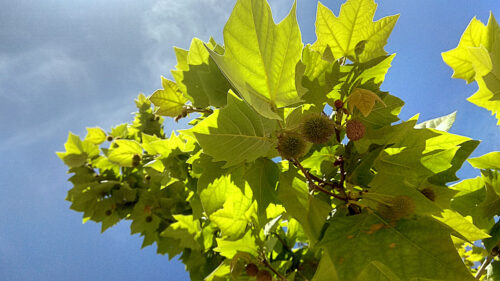
Reaching heights of 65 to 100 feet, the London Plane is an impressive specimen that naturally forms a broad, umbrella-like crown. Thanks to its massive, five-lobed leaves (which can grow up to 10 inches wide!), this fast-grower provides deep shade within just a few years of planting. As the tree matures, the branches tend to arch toward the ground, making you feel like you’re tucked away under a massive green canopy. It’s incredibly hardy and isn’t picky about soil types.
++Serviceberry, Umbrella-Form (Amelanchier lamarckii)
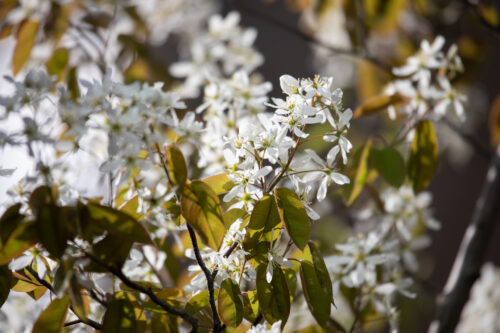
Over time, the Serviceberry (or Juneberry) transforms from a multi-stemmed shrub into a stunning tree with a wide canopy—often maintaining a beautiful umbrella shape even without pruning. In the spring, brilliant white flower clusters pop against the copper-colored new leaves. By late summer, you’ll get sweet, berry-like black fruits that are actually delicious. To top it off, the Serviceberry puts on a final show in the fall with foliage ranging from bright yellow to deep red.
++Dwarf Northern Catalpa (Catalpa bignonioides ‘Nana’)
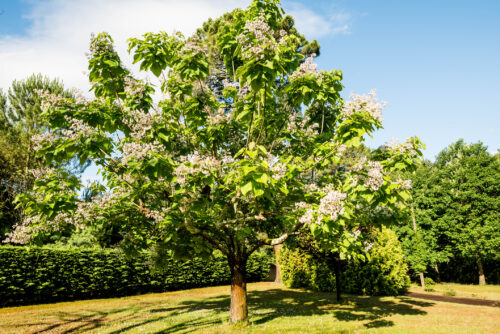
While the crown of a young Catalpa starts out round, it matures into a gorgeous, flat-topped umbrella shape. Growing only 13 to 20 feet tall, it’s the perfect shade provider for smaller yards. If it starts getting a bit too wide for your space, it handles pruning like a champ. The fresh green, heart-shaped leaves turn a vibrant yellow in the fall, keeping your garden looking decorative all season long.
++European Black Elderberry (Sambucus nigra)
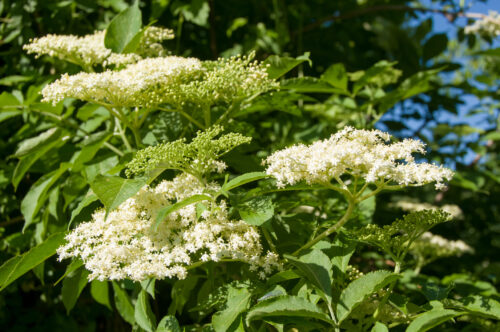
This native species is a fantastic fit for wildlife-friendly or “natural” gardens. This fast-growing small tree reaches heights of 10 to 23 feet and can grow just as wide. With a little bit of pruning, you can train it into a perfect umbrella shape that offers dense, cool shade. In early summer, it’s covered in white blossoms (perfect for making elderflower syrup!), followed by dark purple berries in late summer that are packed with vitamins and great for juicing.
++Persian Ironwood (Parrotia persica)
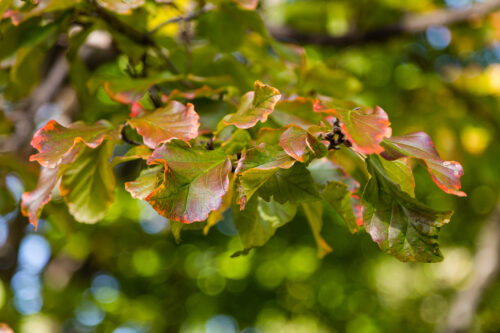
You’ll need a little patience with this one since it’s a slow grower, but the payoff is worth it. The Persian Ironwood eventually reaches 20 to 25 feet in height and width, making it a great focal point for medium-sized gardens. The foliage is the real star here: it starts out reddish in the spring, turns a lush dark green in summer, and finishes with a breathtaking display of orange and crimson in the fall.
++Judas Tree / Eastern Redbud (Cercis siliquastrum)
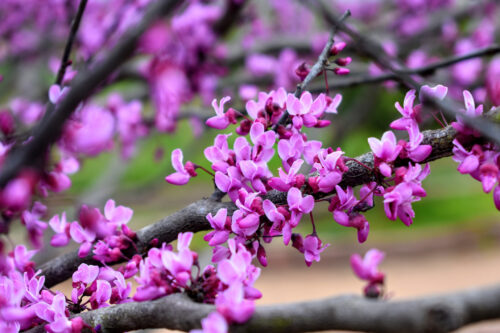
With its wide, spreading canopy, this tree practically begs you to pull up a chair and enjoy the shade. The Judas Tree is especially stunning in the spring when countless pink, edible flowers bloom directly on the branches before the leaves even appear. In some cultures, these flowers are even used to garnish salads! After the blooms fade, long seed pods develop, adding to the tree’s unique, exotic look.
++Empress Tree (Paulownia tomentosa)
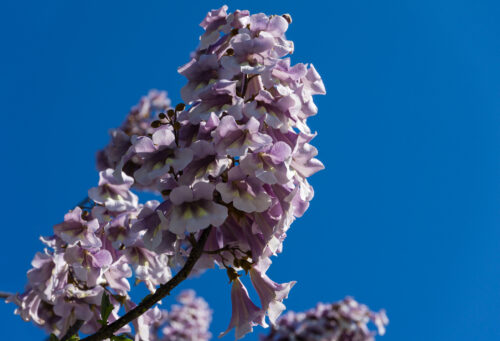
Originally from China, this tree is a speed demon, reaching up to 50 feet in just a few years. It starts with a loose, wide crown that eventually spreads out into a massive umbrella. Once the tree hits about six to ten years old, it becomes the highlight of the neighborhood with 12-inch long clusters of violet, bell-shaped flowers. They have a delicate scent that attracts bees and butterflies by the dozen.
%%Our Insider Tip: Silk Tree / Mimosa (Albizia julibrissin)
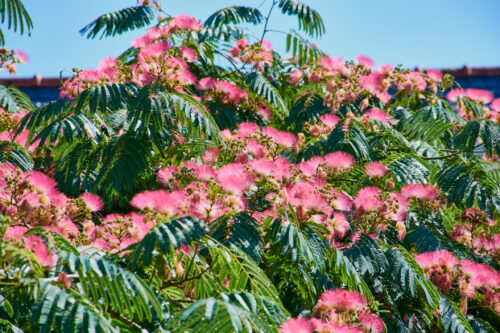
As our summers get warmer, heat-loving and drought-resistant trees like the Silk Tree are becoming huge favorites. Growing only 10 to 20 feet tall, it naturally forms a very distinct, flat umbrella crown. In July and August, it produces exotic, fuzzy pink blossoms that look like little silk brushes. These sit atop delicate, fern-like foliage that actually folds up at night—which is why some people call it the “Sleeping Tree.” It’s the ultimate choice for a tropical vibe in your own backyard.