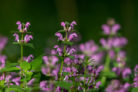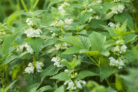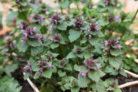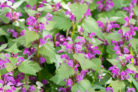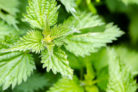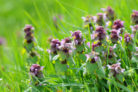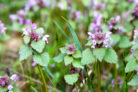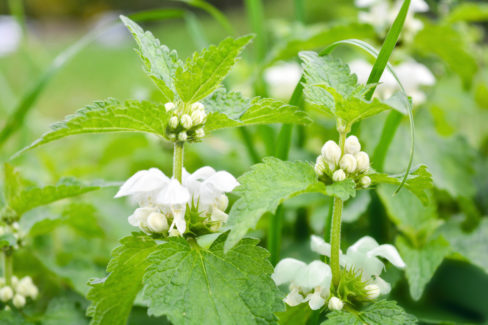
If it weren’t for those charming little flowers, you might mistake the White Dead-Nettle for a common Stinging Nettle at first glance. Their green foliage looks almost identical! Fortunately, this plant shows its true colors early in the year with distinct white, tubular flowers that make it impossible to mix up—and best of all, it doesn’t sting.
Ready to Pop in Early Spring
The White Dead-Nettle (botanically known as *Lamium album*) is a hardy perennial. While the leaves and stems die back in the fall, the roots stay busy storing energy all winter long. This gives the plant a serious head start as soon as the first warm spring days arrive. If we have a mild start to the year, you might see the first blooms as early as April. Even if Mother Nature is being a bit grumpy and cold, you can count on them showing up by May at the latest.
Blooms All Season Long
One of the best things about this plant is its stamina. It doesn’t just bloom and quit; it keeps going until the first hard frost hits in the fall. Depending on when winter decides to show up, you can enjoy these flowers through September or even well into October.
Sweet Scents and Nectar Galore
The name says it all—the flowers are a brilliant, snowy white. But there’s more to these blooms than just a pretty color. Here are a few cool things to look for:
- They have “lipped” flowers (typical of the mint family).
- The flowers grow in circular clusters called “false whorls.”
- Each individual flower is made of two distinct “lips.”
- The white petals can grow up to an inch long.
- The five sepals (the base of the flower) are covered in tiny hairs.
- The pollen is a bright, pale yellow.
These flowers have a lovely honey-like fragrance and are packed with nectar, making them a magnet for bees and butterflies. In some places, people even call it “Bee-Suck” because pollinators love it so much!
Pro Tip:
Instead of trying to get rid of Dead-Nettle, consider letting it hang out in your garden. Because it attracts so many pollinators, it’s a fantastic way to boost your local backyard ecosystem.
How to Use the Flowers (Yes, You Can Eat Them!)
Just like its cousins, the White Dead-Nettle is an edible and surprisingly tasty wild plant. You can actually use the whole thing, from the roots to the flowers. Bloom season is “snack season” in my book because those little lipped flowers are deliciously sweet. They make a gorgeous garnish for salads, herb butters, or desserts. Or, you can do what I do and just snack on them right off the plant while you’re gardening!
Pro Tip:
Want to dive deeper? Check out our White Dead-Nettle Fact Sheet for more info on where to find it and how to use it as a medicinal herb.