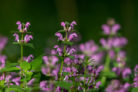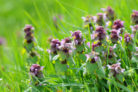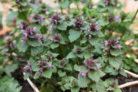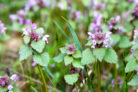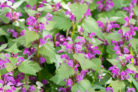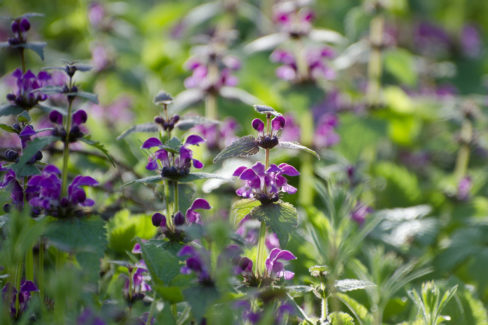
If you’ve ever taken a stroll through your neighborhood or peeked into the corners of your garden in early spring, chances are you’ve run into the Red Dead Nettle. This hardy little annual is a real survivor, popping up everywhere thanks to its incredible ability to spread. Its name comes from those lovely reddish-purple blooms, but don’t let the “nettle” part scare you—this plant is actually a versatile friend for your kitchen, your vase, and even your home remedy kit.
Quick Plant Facts
- Botanical Name: Lamium purpureum
- Common Name: Red Dead Nettle or Purple Dead Nettle
- Genus: Dead Nettles (Lamium)
- Family: Mint Family (Lamiaceae)
- Range: Found all across Europe and North America
- Life Cycle: Annual
- Growth Habit: Low-growing and upright, reaching up to 20 inches
- Leaves: Start with a reddish tint, turning dark green; heart-shaped with fuzzy, serrated edges (about 2 inches long)
- Flowers: Small, purple, hooded blooms; the lower lip often has a tiny pattern
- Bloom Time: March through October
- Fruit: Small nutlets that split into four parts
Where to Spot It in the Wild
Red Dead Nettle is by far the most common species of its kind. It looks a whole lot like the Spotted Dead Nettle, so it’s easy to mix them up! Finding it isn’t hard at all—since it’s happy in both full sun and deep shade, it claims just about any open spot it can find. You’ll see it in farm fields, vacant lots, along roadsides, or hugging the edges of the woods. It’s even known to hop right over garden fences! It’s happiest in soil that is loose, moist, and packed with nutrients.
A Master of Multiplication
This little annual is a pro at reproducing. The seeds germinate super early in the year, making it one of the first splashes of color you’ll see covering the landscape. Because it starts so early (sometimes as soon as February!), it can go from flower to seed in just a few weeks. This speed allows the Red Dead Nettle to churn out 3 to 4 generations in a single growing season!
Pro Tip:
If you aren’t a fan of this wild plant taking over your flower beds, the key is to stop it from flowering and dropping seeds. You can manage dead nettle by pulling individual plants before they bloom. For larger patches, a quick pass with the lawnmower does the trick.
More Than Just a Weed
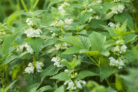
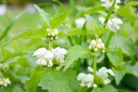
Like its cousins, Red Dead Nettle is completely edible. The leaves actually have a mild, earthy flavor—some say they taste a bit like porcini mushrooms! You can use them just like spinach or kale, and the sweet little flowers make a beautiful garnish for salads. You’ll usually see them blooming from April to October, right alongside the White Dead Nettle.
In traditional herbal medicine, the White Dead Nettle is usually the go-to for soothing inflammation, but the Red variety contains many of the same beneficial compounds.
Pro Tip:
Don’t overlook them as decor! The flowering stems make charming additions to small vases. In particularly mild years, you might even spot them brightening up the garden during the middle of winter when everything else is dormant.