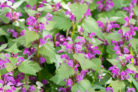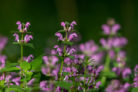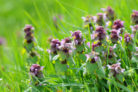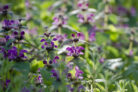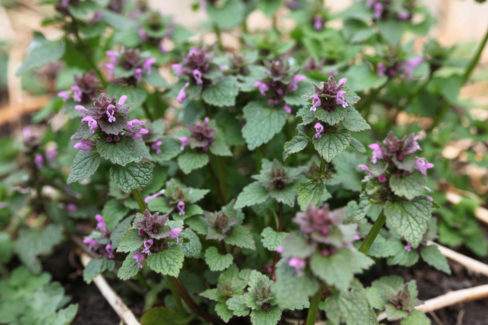
Don’t worry—unlike its lookalike, the stinging nettle, the Dead Nettle won’t leave your hands tingling or covered in welts. In fact, this friendly wild plant is one you’ll actually *want* to get close to. Whether you’re drawn in by its pretty blossoms, its sweet scent, or the chance to forage a healthy snack, there are plenty of reasons to get to know this garden gem. Let’s dive in!
General Information
- Botanical Name: Lamium
- Common Names: Dead nettle, henbit, archangel, bee nettle
- Family: Lamiaceae (Mint family)
- Origin: Primarily Europe and Asia
- Distribution: Worldwide
- Species: About 80
- Most Popular Species: Red Dead Nettle, White Dead Nettle, Spotted Dead Nettle, Yellow Archangel
- Type: Herbaceous perennial, hardy down to -22 °F (-30 °C)
- Propagation: Underground runners and self-seeding
- Growth: Varies by variety and environment, ranging from 8 inches to 6 feet
- Bloom Time: Depending on the species, from March through November
- Toxicity: Non-toxic in all parts
A Quick Look at Leaves and Flowers
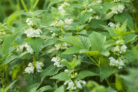
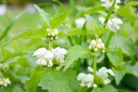
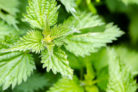
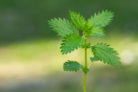
At first glance, the foliage looks a lot like the infamous stinging nettle. The leaves are green, pointed, serrated, and fuzzy. However, they are “dead” (meaning they don’t sting!) because they lack the irritating formic acid found in their cousins. You can touch them all you want without any painful surprises.
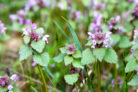
The flowers come in a beautiful palette of white, pink, yellow, red, or purple, which is usually the easiest way to tell the different species apart. These little “labiate” (lip-shaped) flowers can grow up to an inch long and sit in circular clusters around the stem. If you lean in close, you’ll notice a delicate, honey-like fragrance.
Pro Tip:
Because they are loaded with nectar, Dead Nettles are a total magnet for bees and pollinators. If you’re planning to add them to your wildlife garden, you might want to consider a root barrier. Otherwise, this wild herb can spread so vigorously that you’ll find yourself working hard to keep it under control.
Edibility and Taste
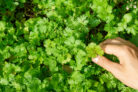
Good news for foragers: this wild plant is completely edible. In the spring, the fresh young leaves are particularly tender with a mild, herbal flavor. You can steam them like spinach, but they’re even healthier raw in salads or smoothies. Once the plant starts blooming, the sweet-tasting flowers are perfect for snacking right off the stem or using as a gorgeous edible garnish.
In the fall, you can even dig up the roots and cook them like a root vegetable—many people say they taste a bit like porcini mushrooms! During the winter, you can sprout the dried seeds for a vitamin-rich addition to your meals.
Use as a Medicinal Herb
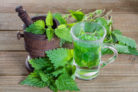
In the world of herbalism, Dead Nettle is often used to help with inflammation. At home, you can easily tap into its soothing properties by brewing a simple tea from the fresh leaves.
Where to Find It in the Wild
In nature, Dead Nettle isn’t very picky and will find a niche almost anywhere it can thrive. It generally prefers partial shade and moist (but not soggy) soil. Keep an eye out for it along roadsides, forest edges, or in overgrown meadows and vacant lots.