Zucchini plants are a total highlight in any summer garden. But let’s be real—right around late summer, they often start looking a little “dusty” thanks to powdery mildew. If you want to keep your plants healthy and your harvest plentiful, you’ve got to stay one step ahead of this fungus. Here’s the lowdown on how to prevent an outbreak and what to do if your plants start looking a bit ghostly.
Preventing Mildew
Mildew on zucchini isn’t just an eyesore; it actually saps the energy right out of your plants and fruits. This leads to a smaller harvest, and in the worst cases, the whole plant can kick the bucket.
Choosing the right spot, picking the best garden neighbors, and keeping up with a solid care routine can delay or even stop the disease in its tracks.
The Location
When you’re scouting a spot for your zucchini, remember: these guys are sun-worshippers. A bright, sunny location is the foundation for a healthy plant.
Airflow is also huge, especially during those humid summer stretches. To make sure the leaves can dry off quickly after a rain, give your plants plenty of elbow room—aim for about three to six feet of space between each plant.
The Neighbors
Zucchini love a little help from their friends! Planting them near beans and corn is a pro move. Beans help fix nutrients in the soil, while tall corn stalks act as a natural windbreak, protecting your zucchini from chilly drafts.
General Care
When it’s time to water, aim for the base of the plant and try to keep the leaves and fruit dry. Moisture is basically an open invitation for fungi and germs. The undersides of the leaves are particularly vulnerable because they stay damp longer—this is where downy mildew loves to hide.
Also, watch out for high-nitrogen fertilizers. Too much nitrogen makes the plant’s tissues soft and weak, making it an easy target for mildew. Stick to a balanced feeding schedule for the best results.
Identifying Mildew
Mildew is a fungus, and in the gardening world, we usually deal with two main types.
Powdery Mildew
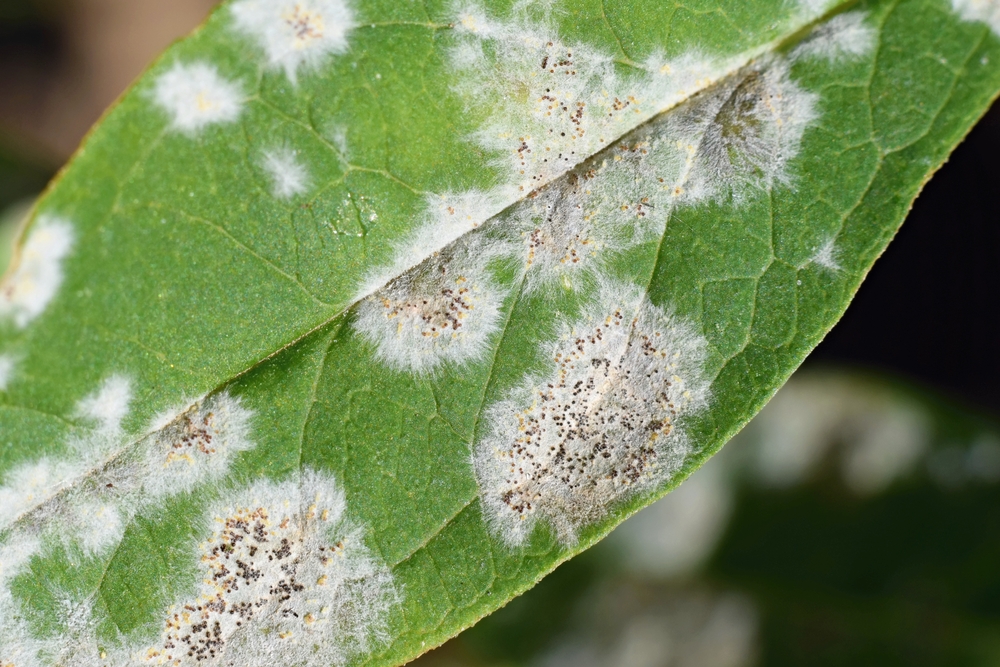
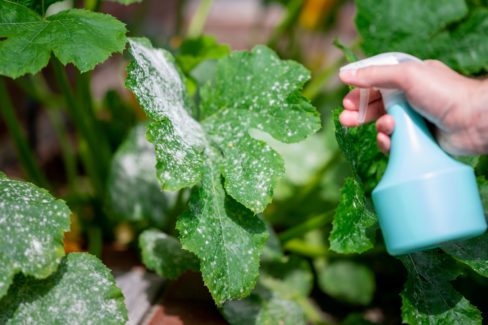
This is the “classic” one. It looks like someone spilled flour on the tops of your leaves. This white, fuzzy coating eventually grows into the plant tissue to steal nutrients, weakening the whole plant.
It thrives in warm, muggy weather with high humidity. The spores are hitchhikers, traveling on the wind or via insects to infect the rest of your garden.
Downy Mildew
This type is a bit more “undercover.” It enters through the tiny pores on the underside of the leaves, where you’ll see a grayish-white fuzz. On the top side of the leaves, you’ll notice yellow, brown, or even reddish spots.
Unlike its powdery cousin, downy mildew loves cool, damp, and foggy conditions.
Fighting Back
Often, a sunny spot, good airflow, and proper pruning are enough to keep mildew away. But if you do spot an infection, you need to act fast. Start by removing the most affected leaves to improve ventilation.
For a natural, organic fix, try a horsetail tea spray (Equisetum). It’s a classic gardener’s remedy! Here’s how to make it:
- Gather about two pounds of fresh horsetail.
- Place it in a pot with about 2.5 gallons of water.
- Let it soak for 24 hours.
- Simmer the mixture for about 30 minutes.
- Strain it through a fine sieve and let it cool.
- Dilute the tea 1:5 with water and spray it on a sunny day.
- Spray once a week as a preventative measure, or every day if your plant is already struggling.
You don’t need fancy equipment—a simple spray bottle from the hardware store works perfectly for getting the tops and bottoms of the leaves.
Pro Tip: You can also use dried horsetail from a health food store or apothecary. Use about 5 to 7 ounces for every 2.5 gallons of water.
Of course, you can also find ready-to-use organic sprays at your local garden center. Just be sure to read the ingredients so you know exactly what you’re putting in your veggie patch.
Other Common Issues
In very wet summers, you might run into other types of mold. Sometimes the fruit, flowers, or leaves will get a fuzzy mold coating. If you see this, snip off the affected parts immediately so it doesn’t spread.
You’ll usually see these issues more often in the fall. Once the weather turns damp and chilly, the zucchini’s “happy place” is gone. By October, the harvest usually winds down anyway, and it’s time to put the garden to bed.