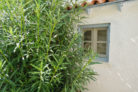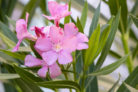
Powdery mildew is a common issue for oleanders, caused by a pesky fungal infection. In this post, I’ll walk you through the signs of an outbreak and show you exactly how to treat it so your plants can get back to looking their best.
Powdery Mildew: The “Fair-Weather” Fungus
Powdery mildew is a fungal infection that gardeners often call “fair-weather mildew.” It earned that nickname because it absolutely thrives when the sun is out and the summer days are warm and dry.
Signs Your Oleander Has Powdery Mildew
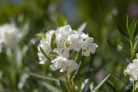
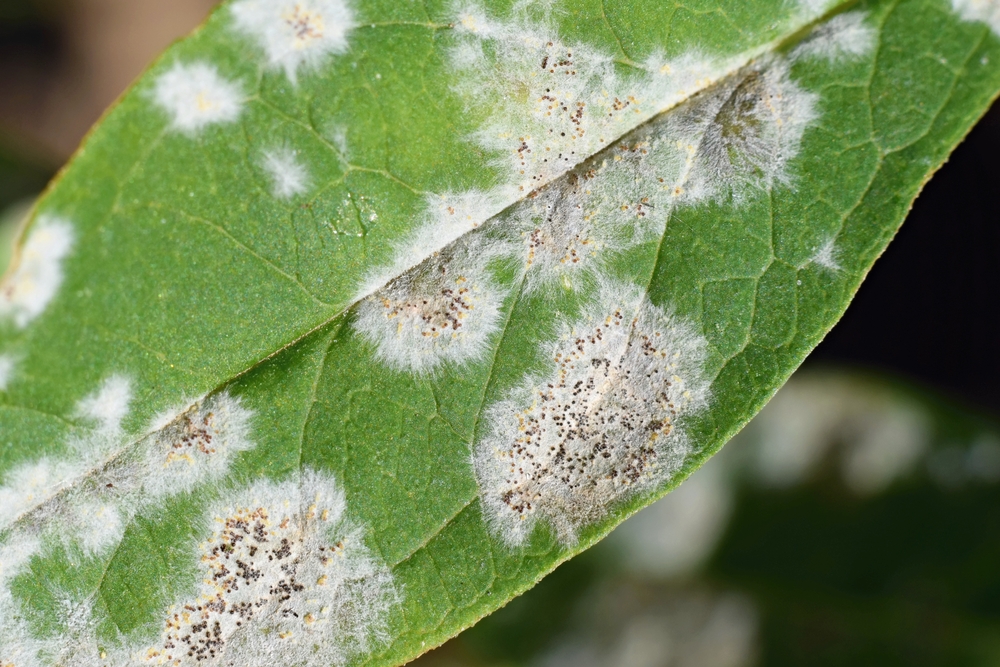
The most obvious sign of an infection is a white, flour-like coating on the leaves, stems, and sometimes even the flowers. A quick way to tell if it’s powdery mildew is to rub it with your finger—if the white dust wipes right off, you’ve found your culprit.
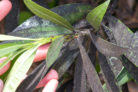
Beyond the white spots, you’ll notice your oleander just isn’t performing well. Growth slows down, and you won’t see as many blooms. This happens because the plant is pouring all its energy into fighting the fungus instead of growing. If left untreated, you might see brown leaves that eventually dry up and drop off.
How to Get Rid of Powdery Mildew
The good news is that you can tackle powdery mildew with store-bought fungicides or even some simple DIY home remedies. The first step, though, is always pruning away the infected areas. Just a quick safety tip: always wear gloves when working with oleander! The entire plant is toxic and can cause skin irritation or worse if you aren’t careful.
Prune Away the Infected Parts
Grab your shears and cut back any parts of the plant showing signs of mildew. Be generous with your cuts—this stops the fungus from spreading to the healthy branches or your other garden plants. If you’re growing your oleander in a pot, it’s a good idea to move it away from your other plants while it’s “in quarantine” during treatment.
The Fresh Milk Remedy
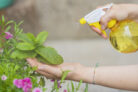
One of my favorite eco-friendly hacks for mildew is a simple mixture of water and whole milk at a 1:10 ratio. Here’s the secret: you have to use fresh milk. Pasteurized or UHT (long-life) milk won’t work because it lacks the live microorganisms that act as a natural fungicide. Just mix it up and spray your oleander regularly until the problem clears up.