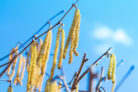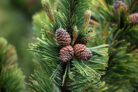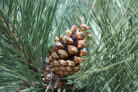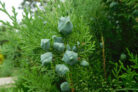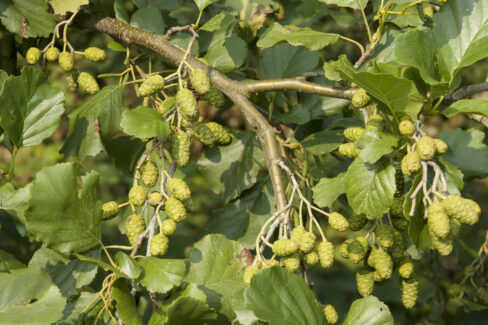
The alder is a bit of a standout in the forest—it’s the only deciduous tree in our neck of the woods that produces cones. In the spring, these cones release the alder’s actual fruit: tiny, round little nutlets. While these are a major food source for local birds, they’re also a favorite for crafters and home decorators looking for a touch of nature.
What Do These Little Fruits Look Like?
Generally speaking, alder fruits are small, round, woody nutlets. Depending on the variety, they might have little “wings” to help them catch the breeze, or they might be wingless. While they all share a similar vibe, the type of alder tree determines exactly how they look.
Italian Alder (Heart-Leaved Alder)
The fruits of the Italian Alder are woody and range from dark brown to almost black. They’re on the larger side for alders, reaching up to about an inch (3 cm) in size.
European Black Alder
The Black Alder is one of the most common varieties you’ll run into. Its woody fruits start out green but transition to a solid brown as they ripen, eventually reaching a deep, dark brown.
Green Alder
True to the pattern, the woody fruits of the Green Alder start off green and gradually turn brown as they mature.
Purple Alder
Just like the Black and Green varieties, the Purple Alder sports fruits that begin as green nubbins and develop into dark brown, woody cones.
Japanese Alder (Alnus Firma)
The Japanese Alder follows the green-to-brown transition, but it takes things a step further. Its fruits ripen into an incredibly dark shade that looks almost pitch black. One cool thing about this variety? The fruits often hang onto the branches all through the winter.
Red Alder
The Red Alder also sees its fruits transform from a bright initial green to a very dark brown or blackish hue.
How the Fruits Develop
It’s a bit of a journey from bud to fruit. First, the buds open into flowers known as catkins. After the blooming period, the female flowers harden and turn into those characteristic brown, woody cones. These stay on the tree throughout the winter, giving the alder its iconic winter silhouette.
It isn’t until the following spring that these cones release the actual fruits—those tiny, winged nutlets.
Seeds and Propagation
Inside those tiny fruits are the alder’s seeds. While you can technically grow new alders from seed, nature usually handles the heavy lifting. The seeds are typically spread by the wind or by birds who’ve stopped by for a snack.
Uses for Alder Fruits
In the wild, alder fruits are a “must-visit” bird feeder. For us humans, they aren’t exactly edible, but they are fantastic for DIY decor! They look great in wreaths or glass jars for both indoor and outdoor displays. Just a pro-tip: if you’re bringing them inside, give them a good cleaning first. Their craggy, uneven surface is great at trapping dirt—and it’s a favorite hiding spot for tiny bugs!