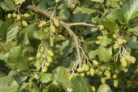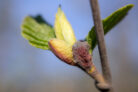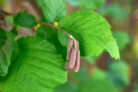
If you’ve ever taken a stroll through the woods or along a riverbank, you’ve likely crossed paths with the Alder tree. In Germany, there are three main native species, and while they might look similar at first glance, their leaves are actually the best way to tell them apart.
The Basics: What Alder Leaves Look Like
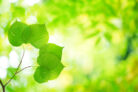
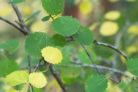
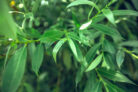
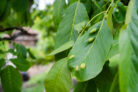
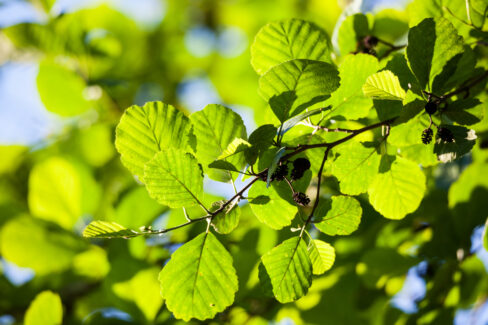
Generally speaking, Alder leaves are a rich, vibrant green and have a slightly oval, elongated shape. Since the Alder is a deciduous tree, it drops its leaves every year as the weather cools down—though with a pretty unique twist that we’ll get into in a bit!
A Closer Look at Different Alder Species
There are about 35 different types of Alder trees worldwide. While Germany is home to the Black Alder, Grey Alder, and Green Alder, you’ll find many other varieties across the globe. The easiest way to identify them is by looking at the fine details of their foliage. Here’s a quick breakdown:
The Grey Alder (Alnus incana)
The leaves of the Grey Alder are egg-shaped and come to a bit of a point at the tip, reaching up to 4 inches in length. The most distinctive feature? A coarse, “double-toothed” edge. If you flip the leaf over, you’ll also notice a fine coating of tiny grey hairs on the underside.
The Japanese Alder (Alnus firma)
While these are also oval-shaped with serrated edges, you can spot a Japanese Alder by the way the teeth on the leaf margins stand out more prominently compared to the Grey Alder.
The Oriental Alder (Alnus orientalis)
These leaves look almost “upside down” compared to the German varieties. They have an obovate shape (wider at the tip than at the base), and instead of being jagged or serrated, the edges are gently wavy with small indentations.
The Purple Alder (Alnus x spaethii)
Don’t let the name fool you—the leaves are still green! However, the underside is noticeably lighter than the top. These leaves are quite large and have a sharper, more tapered point rather than a rounded oval shape.
The Italian Alder (Alnus cordata)
Also known as the Heart-Leaved Alder, these leaves are relatively small and grow asymmetrically. As the name suggests, they have a lovely heart-like base and finely serrated edges.
The Red Alder (Alnus rubra)
The Red Alder sports large, oval leaves that can grow up to 6 inches long. They grow in an alternating pattern along the branch and feature slightly serrated margins.
The Mystery of the Green Leaf Drop
Here is a fun fact for your next nature walk: unlike most deciduous trees that turn brilliant shades of red, orange, or gold in the fall, the Alder stays green. It’s actually the only known deciduous tree that drops its leaves while they are still perfectly green!
So, why doesn’t it change color? It all comes down to a cool partnership under the soil. The Alder has a symbiotic relationship with “root nodules”—special bacteria that live in its roots. The tree provides the bacteria with a home, and in exchange, the bacteria provide the tree with a massive supply of nitrogen. Because the Alder has such an abundance of nitrogen, it doesn’t need to “recycle” nutrients from its leaves before dropping them. This extra boost allows the Alder to thrive even in nutrient-poor soil where other trees might struggle!