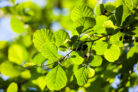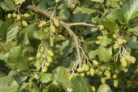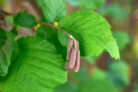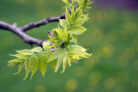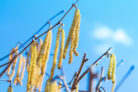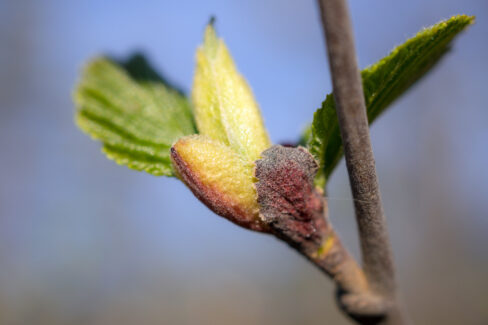
Alder buds are the starting point for the tree’s flowers and, eventually, its fruit. These little guys are early risers—they usually start sprouting in the very first weeks of the year, long before the leaves even think about making an appearance.
Different Buds for Different Species
Just like the leaves vary from tree to tree, different types of alder have their own unique bud styles. Here’s a quick guide to telling them apart:
The Black Alder (Schwarzerle)
Black alder buds are real showstoppers. They grow in a cool spiral pattern, and the colors are striking. The scales are a deep reddish-brown, but if you look at the buds sticking out from the sides, they often have a distinct violet tint. They start out about a quarter-inch long and eventually double in size.
The Italian Alder (Herzblättrige Erle)
The buds on the Italian (or heart-leaved) alder have a beautiful, shiny reddish-brown finish. You’ll find them hanging gracefully from the tree’s smooth branches.
The Grey Alder (Grauerle)
True to its name, the Grey alder has buds with a grayish hue. They are mostly smooth to the touch but are covered in tiny, fine hairs if you look closely.
The Spaeth Alder (Purpur Erle)
Don’t let the name “Purple Alder” fool you! These buds aren’t actually purple or violet—they usually range from grey to green.
The Red Alder (Rot Erle)
Red alders sport red to reddish-brown buds. They are easy to spot because of their narrow, pointed shape, and the side buds tend to stick out away from the twig.
How the Buds Develop
Alder buds are usually the very first sign of life in the new year. They act as the ultimate messengers of spring, showing up well before the first leaves unfurl.
As they open, they develop into flowers, which we call catkins. Because the buds get such a head start, alders have a famously early bloom time.
Once the flowering stage is over, the female flowers turn woody and transform into little cones. These cones aren’t just a great food source for birds; they also house the seeds for new trees. By the following spring, these cones release the alder’s fruit—which are actually tiny little nuts!