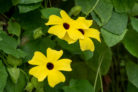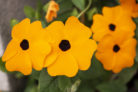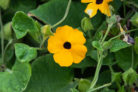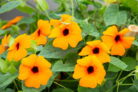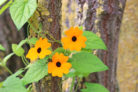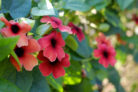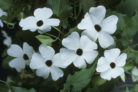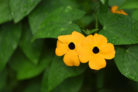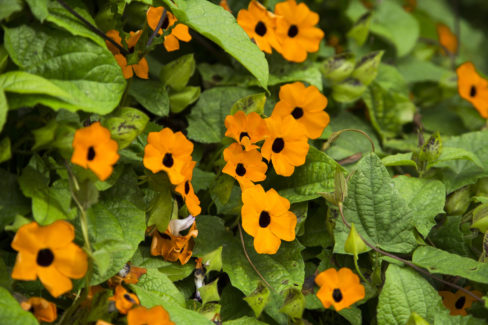
Originally hailing from Africa, the Black-eyed Susan vine is a total sun-worshipper. If you want to see those iconic dark-centered blooms in all their glory, you’ve got to find the perfect sunny spot in your garden or on your balcony.
Summer Outdoors, Winter Indoors
Since this climber starts shivering once temperatures dip below 50°F, it won’t survive a typical winter outside, even with protection. That means you’ll need a “summer home” and a “winter home” for your plant. If you don’t have a good spot to keep it safe indoors during the cold months, don’t worry! This plant grows incredibly fast, so you can just treat it as an annual and start fresh every year from seeds or propagate new ones.
Full Sun is the Way to Go
If you watch these plants closely, you’ll notice they really only start putting on a show once they get at least three hours of direct sunlight a day. To get the best bloom for your buck, pick a spot with full sun, plenty of warmth, and a bit of protection from the wind. A south-facing balcony or garden bed is the gold standard. It can handle partial shade in a pinch, but only if the spot stays nice and warm.
Pro Tip:
Try planting your Black-eyed Susan vine near a south-facing stone wall. The wall will soak up heat during the day and radiate it back to the plant at night!
Keep it Airy, Not Soggy
Back home in Africa, the soil is pretty dry, so you’ll want to make sure your plant doesn’t get “wet feet.” Heavy soil that holds too much water is a no-go unless you mix in some sand or compost to loosen it up. If you’re planting in a pot, make sure you have large drainage holes and a solid drainage layer at the bottom. It’s also a good idea to keep the plant in a spot where it’s shielded from heavy rain.
Give it Something to Climb
Even if your Black-eyed Susan vine is just a tiny cutting right now, it won’t stay small for long! These vines grow like crazy. If you’ve got it in a hanging basket, the vines can just trail down beautifully. For any other spot, you’ll need to provide a trellis or support so it can head skyward in an organized way.
- Set up your trellis at the same time you plant.
- Make sure the support is sturdy and anchored to the wall or pot.
- Remember: these vines naturally wind counter-clockwise!
- Pick a spot that allows you to move both the plant and its trellis when it’s time to head indoors for winter.
A Cozy Spot for Overwintering
When the chilly weather hits, move your plant to a bright spot that stays around 50°F. You don’t need a ton of room, because you should prune the vine back to about 20 inches before moving it. It’ll stay happy indoors from fall until about mid-May (or whenever the frost risk is gone).
Pro Tip:
Did you know Black-eyed Susan vines are actually edible? The leaves and flowers have a flavor a bit like watercress. They’re a fun, peppery addition to salads or smoothies!