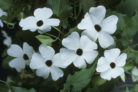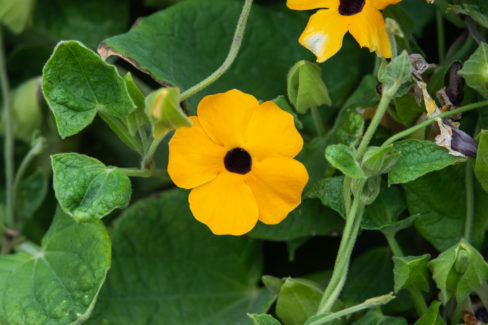
There’s nothing more disappointing than waiting for those iconic “black eyes” to pop against their vibrant yellow or orange petals, only to be met with nothing but green leaves. We put in the work because we want that explosion of color! If your Black-eyed Susan vine is being shy, don’t worry—there’s usually a simple reason why she’s holding back.
Common Culprits at a Glance
- The wrong location
- Watering mishaps
- Nutrient deficiencies
- Seed production taking over
The Wrong Location
The Black-eyed Susan vine (botanically known as *Thunbergia alata*) can be a bit of a diva if she’s not happy with her surroundings. If she’s stuck in a spot that’s constantly cold, windy, or getting hammered by rain, she’ll likely stop blooming altogether. If your climber is struggling, it’s time for a move! Look for a spot that is:
- Full sun to partial shade
- Warm
- Sheltered from the wind
- Airy (but not drafty!)
Pro Tip:
To keep the air circulating well around your vine, make sure to give her some breathing room. Don’t crowd her too closely with other plants.
Watering Mistakes
Since our plants can’t exactly tell us when they’re thirsty, it can be tricky to get the balance just right. The golden rule for *Thunbergia* is that she hates being bone-dry, but she absolutely despises “wet feet” (soggy roots). Your best bet is to water “moderately but regularly.” Always make sure your pots have a good drainage layer at the bottom. Once you get the hydration back on track, the blooms usually follow.
Nutrient Deficiencies
If you start your seeds indoors early or successfully overwinter an older plant, you can expect the first flowers as early as May. However, once those blooms start appearing, you need to ramp up the feeding. No fuel means no flowers! Plan on giving her a dose of fertilizer every two weeks to keep the momentum going.
Seed Production
If your vine starts off strong but then the flower production starts to fizzle out, she might be putting all her energy into making seeds. If you want a steady stream of flowers all the way into October, you’ve got to be diligent about deadheading. Snip off those faded blooms as soon as they wither! If you want to save seeds to propagate more plants for next year, just leave a few spent flowers on the vine toward the end of the season for sowing later.