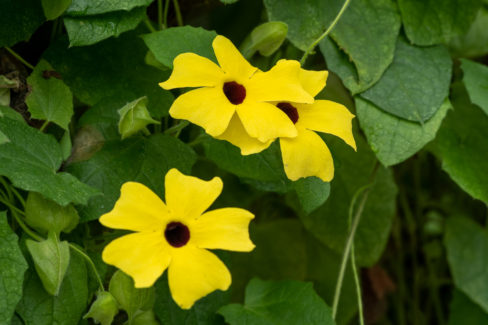
During the summer, it’s easy to see just how much Black-eyed Susan vines love soaking up the sun. But don’t let those lush vibes fool you into leaving them outside once the weather turns. When it comes to winter hardiness, these beauties simply don’t have what it takes to survive a frost.
The “One-and-Done” Approach
Since Black-eyed Susan vines (Thunbergia alata) are native to Africa, they aren’t winter-hardy in most American climates. However, they are still huge favorites for backyard trellises because they grow incredibly fast—reaching up to 6 feet in a single summer and covered in gorgeous blooms. Because of this, many gardeners treat them as annuals, simply starting fresh each year by sowing new seeds, which are super affordable and easy to find.
Timing and the Perfect Winter Spot
If you have a favorite plant you’re not ready to part with, you can definitely overwinter it indoors with a little effort. You’ll want to bring it inside as soon as nighttime temperatures start dipping below 50°F (10°C). The ideal winter home is a bright spot that stays cool—around 50°F—like a sunroom, a bright stairwell, or an unheated (but frost-free) garage. Make sure there’s a bit of “elbow room” around the plant so the air can circulate freely.
Pro Tip:
Plants growing directly in the ground are tough to dig up in the fall without damaging the roots. It’s much easier to grow your vine in a large pot so it stays mobile. Ideally, attach your trellis or support directly to the pot so the whole setup moves together.
Prepping for the Move
To make the plant more manageable and save some space indoors, you can cut it back to about 20 inches (50 cm). Before you bring it inside, go through this quick checklist:
- Strip off any dried-out or yellow leaves.
- Check thoroughly for pests or diseases.
- If you find any unwanted hitchhikers, treat the plant with an appropriate organic spray before moving it in.
Winter Care and the Spring Wake-up Call
Winter maintenance is pretty low-key: water sparingly and keep an eye out for pests. You can skip the fertilizer entirely during this dormant phase. Even though your Black-eyed Susan shouldn’t move back to the balcony or patio permanently until the danger of frost has passed in May, you’ll want to wake it up a bit earlier. Get a head start on those early blooms by moving the plant to a warmer, brighter spot starting in February. If you want to expand your collection, this is also the perfect time to take cuttings and root them indoors!