Virginia Creeper and Boston Ivy—collectively known as Parthenocissus—are often called “self-climbing” vines. But here’s a pro tip: not every variety in this family can actually climb on its own! Some types are a bit more high-maintenance and need a helping hand, like a trellis or a fence, to get off the ground.
Different Varieties of Parthenocissus
When you’re shopping for these vines, you’ll find a huge range of species and cultivars. While the general consensus is that they’re all self-climbers, that’s not quite the case. You can basically split them into two camps:
- The self-climbers
- The non-self-climbers
The Most Popular Self-Climbers
If you’re looking for a vine that does the heavy lifting itself, these are the two you’ll see most often in American landscapes:
- Boston Ivy (the classic “Ivy League” look)
- Virginia Creeper (specifically the ‘Engelmannii’ variety)
The Non-Self-Climbing Types
On the flip side, the Common Woodbine (a close relative of Virginia Creeper) doesn’t have the “sticky feet” needed to grip a flat wall. It’s just as vigorous and beautiful as its cousins, but it needs a support system to grow upward.
How Self-Climbers Do Their Thing
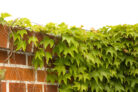
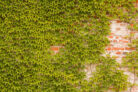
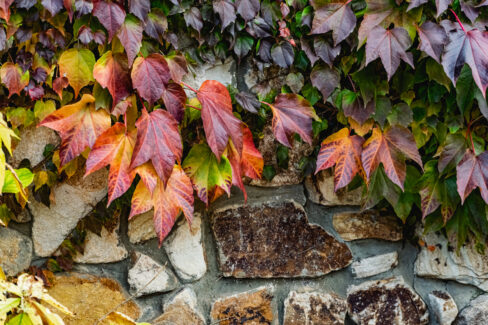
So, what’s the secret sauce? Self-climbing vines have tiny tendrils equipped with small adhesive pads (think of them like little suction cups). These allow the plant to latch onto almost any surface, meaning they can scale house walls, stone masonry, and fences all by themselves.
A Word of Caution: Watch Your Walls
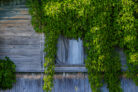
Before you let these vines go wild, keep in mind that those powerful tendrils and adhesive pads can sometimes be a bit *too* good at their job. They can cause real damage to siding or old masonry. It’s a good idea to regularly check your walls for cracks or structural issues. Also, keep an eye on your gutters and shutters—these vines grow fast and can swallow them up before you know it! Give them plenty of space, because removing the leftover adhesive pads later can be a real chore.
Using Supports for Non-Climbing Varieties
If you fall in love with a variety that doesn’t climb on its own, don’t sweat it! You just need to provide a support system like a trellis or a lattice. You can pick these up at any garden center or DIY your own using thin wooden slats, wire, or sturdy twine. You can even “train” the plant to grow exactly where you want it. Just be gentle when tying them up—you don’t want to pinch or snap those delicate young stems!