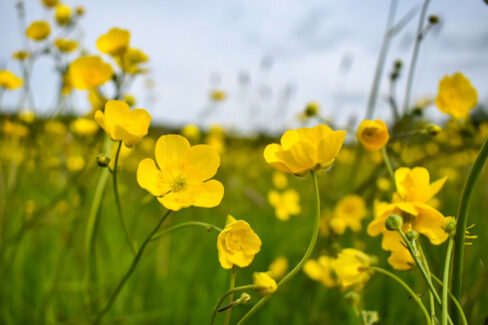
“Buttercup” is kind of a funny name for a plant, don’t you think? I mean, butter comes from cows, so at first glance, it doesn’t seem to have much to do with a wildflower. But there’s actually a cool history behind the name that tells us a lot about this bright yellow bloom. But first, we have to clear something up: which “butterblume” are we actually talking about?
Double Trouble: Which Buttercup is Which?
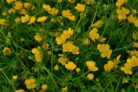
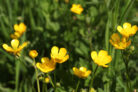
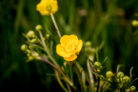
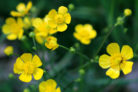
Depending on where you live, people use the name “buttercup” for a few different yellow flowers, but two main ones usually steal the spotlight. First, there’s the super common dandelion. Its petals are a rich, buttery yellow—sometimes even more intense than the real thing—which is why it gets the nickname in many regions. However, the “true” buttercup is actually the Tall Buttercup (Ranunculus acris) from the Ranunculaceae family. It’s just as yellow as a dandelion but has a totally different look. That’s the little guy we’re focusing on today.
What’s in a Name?
Back in the day, those sunny yellow petals were actually used as a natural dye. They helped give farm-fresh butter an even deeper, golden hue. In return, butter became the namesake for the flower! But here’s a quick heads-up: while dandelion flowers are edible and actually pretty healthy, you need to be careful with the Tall Buttercup and its entire family. These plants are toxic when fresh and definitely not edible. Drying or heating them destroys the toxins, which is why only dried petals were used for coloring butter.
Buttercups in Traditional Folk Medicine
In old-school folk medicine, the buttercup was used to treat all sorts of ailments—everything from chest pain and rheumatism to gout, colds, headaches, and even diarrhea. However, it hasn’t really made the cut in modern, evidence-based medicine. Because of its toxicity, I’d strongly recommend against any “DIY” experiments with this one!
The Symbolism of the Buttercup
The cheerful yellow buttercup carries some pretty interesting symbolic meanings:
- Prosperity
- Financial growth
- A love of money
- Ingratitude
- Divination (think “he loves me, he loves me not”)
The buttercup is also sometimes called a “wish-fulfiller.” The tradition goes like this: pick a small bouquet, visualize your wish, and place them in a vase with the firm belief that your wish will come true.
Pro Tip:
Know someone who’s going through a bit of a financial pinch? Gift them a little bunch of buttercups to help “magnetically” attract some extra cash. For more details on this plant, check out our Buttercup Profile.