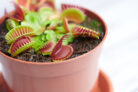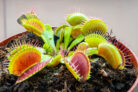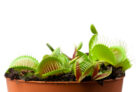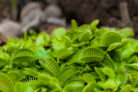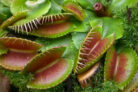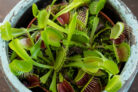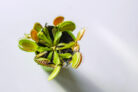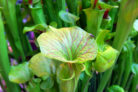
When it comes to feeding, carnivorous plants are actually pretty low-maintenance. However, if you’re growing them in pots, you’ll want to give them a fresh home every year. If you skip this, they can run low on essential nutrients—and unfortunately, you can’t just fix that with a bottle of fertilizer.
Skip the Fertilizer
Carnivorous plants are incredibly sensitive when it comes to nutrients. In their natural habitats, the soil is usually pretty “poor,” which is why they evolved to snack on insects like fruit flies to get what they need. While these plants are pros at handling low-nutrient environments, they really struggle if the soil gets too rich. In fact, over-fertilizing can actually kill them.
Standard peat-based bog soil or specialized carnivorous plant substrate provides just enough nutrients to last about a year. Stick to that and skip the extra fertilizer entirely—it’s just not worth the risk of “burning” your plants with too many nutrients.
When to Repot
The best time to repot your carnivorous buddies is early spring. If you’ve been overwintering your plants indoors, you’ll want to get them into fresh soil right before they wake up from their winter nap.
Even for plants like Pitcher Plants (Nepenthes) that grow year-round without a dormant phase, spring is still the ideal time for a refresh. Plus, if you have plants that can be propagated by division, repotting time is the perfect opportunity to split them up and grow your collection!
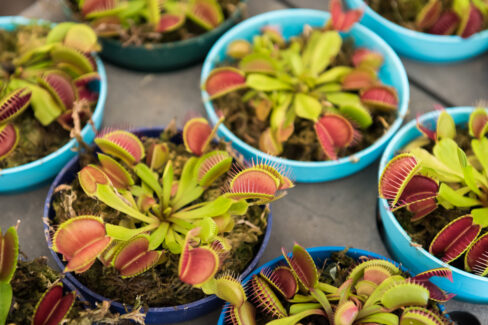
When picking out a new pot, make sure there’s plenty of elbow room. Some species can grow several inches a year when they’re happy! Aim for at least an inch or two of space between the plant and the rim of the pot. Most carnivores have shallow root systems, so standard pots are usually deep enough as long as they are wide enough.
Step-by-Step Repotting Guide
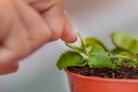
Be gentle when you’re moving your plants. Try your best not to trigger any of the traps! Closing a trap takes a lot of energy, and you want the plant to focus that strength on settling into its new home instead.
How to repot your plants:
- Carefully slide the plant out of its old pot.
- Gently remove as much of the old substrate as possible.
- Check the roots and leaves for any signs of pests or disease.
- Fill the bottom of the new pot with some lava rock for drainage.
- Add your fresh carnivorous plant substrate.
- Press the soil down lightly (don’t pack it too hard!).
- Give it a very thorough watering.
For watering, most carnivorous plant parents use the “tray method.” Fill the saucer with about an inch of water and let the soil soak it all up. Wait until the saucer is dry for a few days before adding more. If you’ve just repotted, the fresh soil might drink up that first tray of water in minutes—if that happens, go ahead and give it a second refill right away!