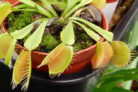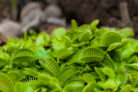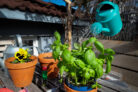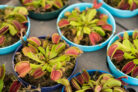
Carnivorous plants are usually a project for more experienced green thumbs. This group of plants is notoriously picky, and even a tiny slip-up with your watering routine can cause long-term issues that are tough to bounce back from.
Stick to Lime-Free Water
If you’re growing carnivorous plants at home, your biggest challenge is going to be avoiding “hard” water. In many areas, tap water is loaded with minerals like lime and calcium, which is a total dealbreaker for these plants.
Rainwater is the gold standard here. If you can’t collect your own, you’ll need to demineralize your tap water first. Alternatively, you can use distilled water, though keep in mind that the costs can add up over time if you have a large collection.
Keep Things Moist (But Not Drowning)
The best way to water carnivores is using the “tray method.” This involves filling a reservoir with a good amount of water and letting the soil soak it all up. Once the reservoir is empty, wait about two days before refilling it.
Most of these plants hail from tropical rainforests with humid climates, meaning their soil never truly dries out in the wild. You should aim for the same at home. Generally, you’ll find yourself refilling the water supply about once a week. However, keep an eye out for waterlogging. If you notice the plant isn’t “drinking” as fast as usual, check the roots and the soil immediately—you might need to let the substrate breathe a bit longer.
Always Water from the Bottom
When using the tray method, it’s super important to water exclusively from the bottom. If you pour water over the top, the sensitive crown (where the leaves meet the roots) can stay too damp, leading to rot.
Use a saucer or a deep decorative pot to hold the water. You want the water level to sit about half an inch to an inch high (1-2 cm) so your plants have plenty of hydration for the next few days.
Every two or three weeks, you can mimic a light rain shower with a spray bottle. Don’t soak the plants directly; instead, create a fine mist that gently settles over the leaves.
Skip the Fertilizer
Here’s some good news: carnivores don’t need any extra fertilizer! To keep them happy, though, you should repot them every year. The nutrients found in fresh specialty soil are usually enough to sustain them for about twelve months.
This means you can skip the liquid fertilizer entirely—your watering routine just got one step simpler!