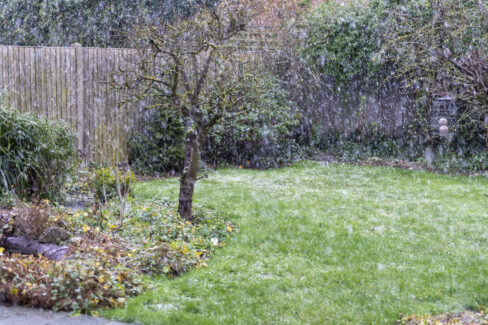
If you’re noticing leaves falling off your Purple Leaf Plum (Blutpflaume) out of season, it’s definitely time to pay attention. If the foliage is full of tiny holes, you might be dealing with a fungal infection. On the other hand, irregular tears usually point toward pests. Sometimes, though, it’s just a case of the wrong “home” or a little slip-up in your care routine. Let’s dive into what’s going on and how you can fix it.
Dropping Leaves Before Fall is a Red Flag
Like most deciduous trees, the Purple Leaf Plum naturally sheds its leaves in the autumn. Once the last fruits have fallen or been harvested, the tree starts prepping for its winter nap.
However, if your tree starts dropping leaves at any other time of year, consider it a cry for help.
Here are the most common symptoms to look for:
- Your tree is losing a significant amount of foliage.
- The leaves have irregular holes in them.
- You don’t see any obvious larvae or pests crawling around.
If that sounds familiar, here’s what might be happening:
- Your tree is hungry (nutrient deficiency).
- The soil is staying too wet (poor drainage).
- There’s no “tree circle” or mulch bed around the base.
How to Get Your Tree Back on Track
If your tree is still young, you might want to consider transplanting it to a better spot. If moving it isn’t an option, try digging up the top layer of soil and mixing in some high-quality compost or horn shavings to give it a nutrient boost.
Another pro-tip: create a generous “tree circle” (a mulch ring) around the base. This area should be at least three feet in diameter. Of course, if your tree is older and larger, you’ll need to scale that up accordingly. These circles are lifesavers—they give shallow roots room to breathe, keep weeds at bay, and prevent moss from taking over the root zone.
A Little Extra Nutrition Goes a Long Way
To help your tree bounce back quickly, don’t be afraid to use a specialized fertilizer. This gives your Purple Leaf Plum the energy it needs to recharge and strengthens its natural immune system against future diseases.
Preparation is Everything
The best way to avoid these headaches is to do your homework before you even dig the hole. When buying a tree, make sure you know exactly what that specific variety needs to thrive. Getting the location right from day one ensures your tree develops a strong root system and stays healthy for years to come.