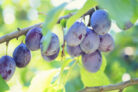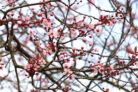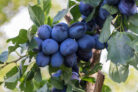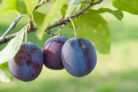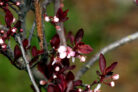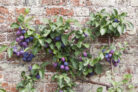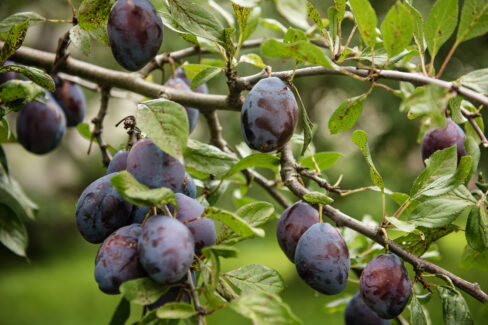
The Purple Leaf Plum is a total showstopper in any yard, thanks to its deep red—almost black—foliage. But it’s not just a one-trick pony; in the spring, it treats us to a stunning explosion of pink blossoms, and by fall, you can even snack on its small, sweet fruits. If you want to keep yours looking its best, here are my top tips on how and when to give it a little trim.
The Purple Leaf Plum is a slow and steady grower
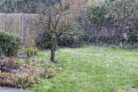
This colorful woody plant can grow as either a small tree or a large shrub. It’s not in any rush, usually adding only about 10 inches of height per year. Eventually, the tree’s growth can reach about 23 feet tall. It develops a lovely funnel-shaped crown that can spread out to about 16 feet wide.
One of its coolest features is the dark, blackish-brown bark contrasted with brownish-red young shoots. The deep red leaves are what give the “Cherry Plum” its name, and they actually get darker as the season goes on, sporting a beautiful metallic shimmer.
If you’re working with a smaller backyard, you might want to look into the Dwarf Purple Leaf Plum. It only gets to be about 6 feet tall and is perfect for growing in large containers on a patio.
Pruning for a polished look
These trees are pretty low-maintenance and don’t strictly *need* a haircut every single year. However, a light structural pruning gives you the chance to guide the shape of your ornamental tree and keep it looking tidy.
Plus, pruning boosts the tree’s overall health and its ability to fight off diseases. Your purple-leafed beauty will thank you by blooming even more vigorously the following spring.
Now, if you have a Dwarf Purple Leaf Plum, I definitely recommend an annual trim. These little guys really only look their best when they are kept in a neat, compact shape.
Timing is everything: Prune after the bloom
The best time to head out with your shears is right after the flowering period, usually in May or June. At this point, the sap pressure is lower, so the tree won’t “bleed” as much from the cuts.
Since the tree is in its active growing phase during this time, it has plenty of energy to seal those wounds and heal quickly. Purple Leaf Plums create their own wound tissue, which acts as a natural shield against pests and pathogens.
How to prune your Purple Leaf Plum
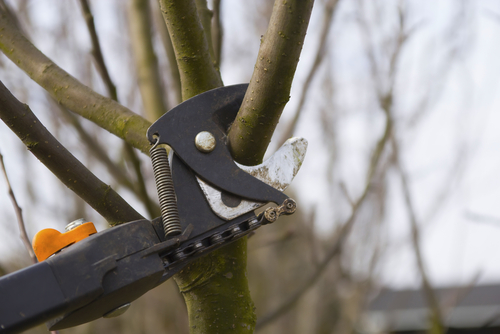
A good pruning job keeps your tree healthy and looking sharp. To make sure you get it right, just follow these simple steps:
- Always use clean, sharp pruning shears or loppers.
- Never cut branches flush against the main trunk; leave a small collar.
- Try to avoid making very large cuts whenever possible.
- Use a wound sealant on any large cut surfaces.
- Prune young trees (1–3 years old) every year to establish their shape.
- For older trees, a good maintenance trim every three years is usually plenty.
- If you have a young standard (high-stem) tree, stick to annual pruning for the first few years.
- Avoid pruning during the fall and winter months.
- Aim for about 8 inches of space between branches in the crown to let light in.
- Always cut back stunted or diseased shoots aggressively.
- Remove “water sprouts” (those thin, vertical shoots) and any branches growing straight up.
Before you start clipping away, always double-check the branches to make sure there aren’t any birds nesting or other critters hiding in the foliage!