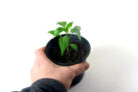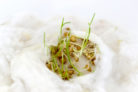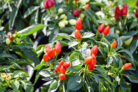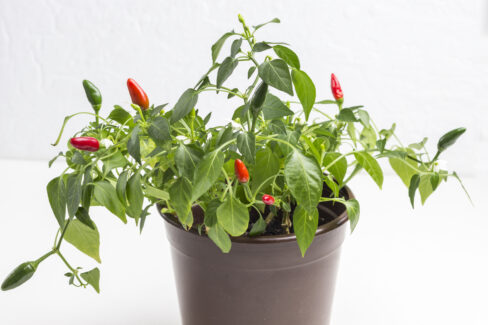
Getting chili seeds to sprout can be a bit of a test of patience, mostly because many varieties take their sweet time to wake up. One thing all peppers have in common, though? They are “dark germinators.” This means they need to be tucked under a layer of soil to get started—they won’t sprout if they’re just sitting out in the light.
The Big Soak
Since chilies and bell peppers have such a long germination period, I highly recommend giving your seeds a 24-hour soak in water before planting. This softens the outer shell, making it much easier for that tiny seedling to break through.
To give them an extra boost, you can use a “seed steep” like chamomile tea. Steeping helps protect the seedlings during their most vulnerable stage and usually leads to much more vigorous plants. If you go the tea route, just make sure the tea has cooled down to lukewarm before adding your seeds.
Drop your seeds into the liquid and leave them in a warm spot overnight. A warm basement or even the top of a fridge (where it catches a bit of ambient heat) works great. Just a heads-up: never put your seeds directly on a hot radiator! That’s way too much heat and will either kill the seeds or trigger a “germination lock” where they refuse to sprout at all.
Choosing Your Soil
For the best results, grab a bag of standard seed-starting mix. These mixes are low in nutrients, which actually encourages the plants to grow stronger, deeper roots in those first few weeks.
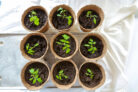
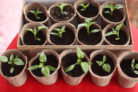
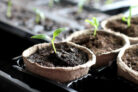
Alternatively, you can use coconut coir pellets (Jiffy pellets). These are super convenient because you can plant them directly into a larger pot later on. Just place the dry pellets in a tray, add water, and watch them expand. Give them plenty of time to fully soak up the moisture before you start planting.
Sowing the Seeds
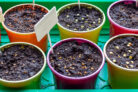
Remember, chilies need darkness to sprout, so they’ve got to be covered. A thin layer of soil—no more than about a quarter-inch—is perfect. I recommend using a small indoor greenhouse for sowing. Fill it with your soil or place your expanded pellets inside, then space out your seeds and cover them lightly. Pro tip: use a sieve to sift the soil you put on top. Even seed-starting mixes can have chunky bits that make it hard for a tiny sprout to push through.
If you’re using pellets, just press the seed down a few millimeters and pinch the surrounding coir over the top to cover it.
Care and Maintenance
If you used pellets, you usually don’t need to water immediately after planting. However, if you used loose seed-starting soil, make sure to give the seeds a good initial watering.
The golden rule from here on out is consistency: keep the soil moist (but not soggy!) at all times. You’ll also want to keep them warm—aim for a steady temperature of at least 77°F (25°C) to ensure those peppers successfully sprout.