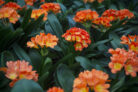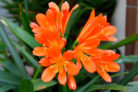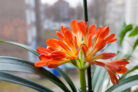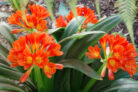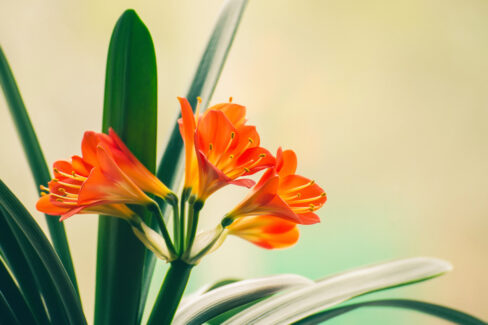
Those deep green Clivia leaves are stunning, but they’re also a bit like a “check engine” light—if they start turning yellow or brown, your plant is trying to tell you something is wrong. If you don’t jump in to help, you might lose the whole plant. Usually, the culprit is one of three things:
- Too much direct sun
- Over-fertilizing
- Inconsistent watering
Sunburn: When direct light turns leaves yellow
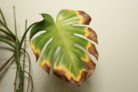
While Clivias love a bright spot, they really can’t handle harsh, direct sunlight. If yours is sitting on a sunny windowsill, the glass can actually act like a magnifying glass, scorching the leaves. This usually shows up as yellow or brown spots that look like blotchy burns.
To save your Clivia, go ahead and trim off those burnt leaves and move the pot to a spot with filtered light. You definitely want to avoid that intense midday sun. Since Clivias are homebodies and don’t like being moved around constantly, try to find a permanent “forever home” for it where the light is bright but indirect.
Over-fertilizing: Too much of a good thing
Your Clivia does need a regular boost of fertilizer to stay healthy, but it’s easy to overdo it. If you’re feeding it too often or using a dose that’s too strong, the leaves will start to yellow in protest. To fix this, skip your next scheduled feeding and then dial back the amount you use moving forward. In this case, “less is more” is a great rule of thumb. If you’re using slow-release spikes or granules, just use fewer of them next time you refresh the soil.
Watering woes: Keeping things consistent
If your watering schedule is a bit hit-or-miss, your Clivia’s leaves will likely turn yellow and eventually start to wilt. The goal is to keep the root ball from drying out completely, so try to keep a steady routine. Also, keep an eye on your water quality—Clivias prefer soft water. If your tap water is very “hard” (high in lime/calcium), that can also cause yellowing.
During the summer, your plant is thirstier and appreciates a good soak, but always make sure the pot drains well—nobody likes “wet feet” or standing water! In the winter, you can significantly cut back on watering. Just give it enough so it doesn’t bone-dry, as the plant doesn’t need much moisture during the colder months.