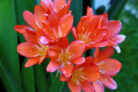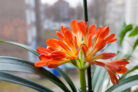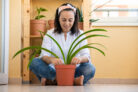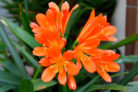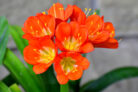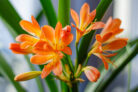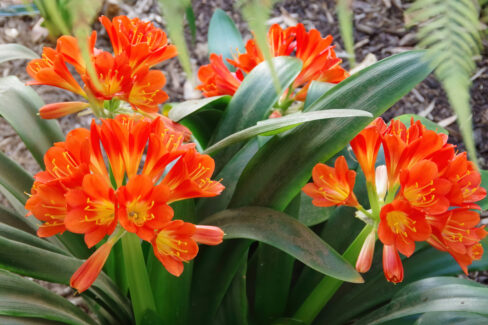
As your Clivia matures, it starts blooming more and more beautifully every year. Naturally, you might start wondering if you can propagate your own instead of heading back to the garden center for a new one. The good news? You definitely can!
You have three main ways to grow your Clivia collection:
- Propagating via offsets (pups)
- Dividing the plant
- Growing from seed
Propagating Clivias with Offsets
The easiest way to get a new Clivia is by using offsets, often called “pups.” Clivias naturally produce these little clones right from their roots. Once a pup reaches about 8 inches (20 cm) in height, it’s ready to strike out on its own. You’ll often hear gardeners refer to this as dividing the Clivia, even though you aren’t actually cutting the main plant in half.
To do this, use a sharp, clean knife to carefully detach the pup. The key here is precision—you don’t want to damage the mother plant or the baby. Once it’s off, rinse the cut area with water. A pro tip: dab a little charcoal powder on the cut to help disinfect it and prevent rot.
Next, tuck your new offset into a pot with fresh substrate. A few good options include:
- Peat-based potting soil
- A mix of peat and sand
Growing Clivias from Seed
If you’re a patient gardener, you can try growing Clivias from seeds. Just a heads-up: this is a long game! It often takes about five years for a seedling to grow into a flowering plant. To get seeds in the first place, you’ll usually need to play “busy bee” and help with pollination using a small paintbrush.
Only fully ripe seeds will germinate, and it can take several months for the seeds to mature on the flower stalk. If you notice the seeds starting to sprout while still attached to the plant, go ahead and remove them, then gently press them into some seed-starting mix.
Caring for Your New Clivia Babies
Whether you started with a pup or a seed, your new plant needs a bright spot with plenty of indirect light. Keep them out of direct sunlight—that harsh midday sun is notorious for scorching the foliage, which you’ll recognize by yellow or brown patches on the leaves.
For healthy growth, keep the soil consistently moist but never soggy. This is especially critical when growing from seed, as the seeds are very prone to rotting if they sit in water for too long.