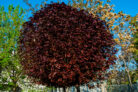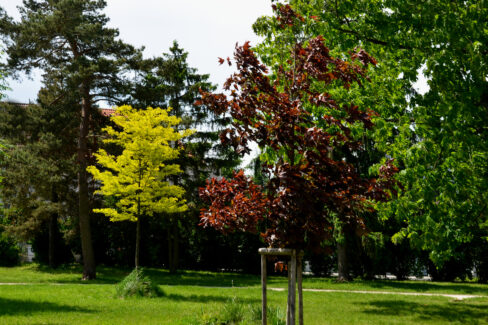
If you’re working with a smaller yard, you’ll definitely want to think twice before planting a Crimson King Maple (or any variety of Blood Maple). While these trees are absolutely stunning, their root systems are ambitious, growing both deep and wide. Before you grab your shovel, let’s dive into the details of how these roots behave and how to keep them from causing trouble in your landscape.
The Lowdown on Root Growth
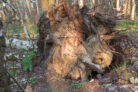
The Crimson King is what we call a “heart-rooter,” but it definitely has a tendency to act like a shallow-rooted tree. The good news? You generally don’t have to worry about it cracking your home’s foundation, provided you give it plenty of breathing room when you plant it.
Keep in mind that if you don’t prune your maple, certain varieties can spread up to 25 feet wide. Naturally, the root system is going to mirror that canopy size. If your garden is on the smaller side, your best bet is to choose a dwarf variety that won’t try to take over the whole neighborhood.
Using a Root Barrier to Play It Safe
If you want total peace of mind regarding your walkways or walls, a root barrier is the way to go. These are made of heavy-duty, puncture-resistant plastic that won’t rot underground, creating a “no-go zone” for thirsty roots.
Here’s how to install one:
- Dig a trench about 28 inches deep. The diameter should roughly match the expected size of the tree’s mature canopy.
- Line the edge of the hole with the barrier material.
- Secure the ends together using an aluminum closure strip.
- Plant your maple right in the center.
- Drive in some support stakes and loosely tie them to the trunk to help it stay upright while it gets established.
- Gently tamp down the soil and give it a good soak.
Pro tip: Make sure the barrier sticks out about 4 inches above the soil line. If it’s flush with the ground, roots can actually jump right over the top!
If you aren’t a fan of the look of the plastic rim, don’t worry—you can easily hide it with some pretty groundcover plants or a thick layer of mulch. It’ll disappear into your landscaping in no time.
Getting Through the First Winter
Even though these maples are quite hardy, that first winter can be a bit of a shock for a young tree. You want to make sure it’s well-established before the ground freezes solid.
Here are a few tricks to help your new tree survive its first cold snap:
- Give the root zone some “blankets” by applying a thick layer of mulch, fallen leaves, or evergreen boughs.
- Protect the young, tender branches with a breathable winter frost cover or burlap wrap.