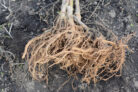
You might look at a graceful, slender birch tree and think it won’t take up much space in your yard. But don’t let that delicate canopy fool you! To really understand a birch, you have to look underground. These trees are notorious “shallow rooters,” meaning their root systems spread out wide rather than deep, claiming a massive amount of territory just below the surface.
All Birches are Shallow-Rooted
Whether you’re looking at a classic Paper Birch or a River Birch, all 50-plus species share one trait: a shallow root system. Because they don’t tap into deep water reserves, they have to grab every drop of nutrients and surface water they can from the top layer of soil. To get enough “fuel” to grow, a birch spreads its roots far and wide around the trunk. This makes them fierce competitors for any other plants trying to share that same patch of dirt.
What This Means for Your Garden Design
Birches aren’t picky. As “pioneer trees,” they’re often the first to move into open spaces with poor soil. This means you can find a spot for a birch in almost any backyard. However, if you’ve fallen in love with that iconic white bark and want to plant one yourself, keep these tips in mind:
- Give them plenty of breathing room away from other shallow-rooted plants.
- They play well with deep-rooted neighbors (taproots), as they aren’t fighting for the same soil level.
- Keep them away from walls or paved paths, as those spreading roots can cause lifting over time.
Pro Tip:
Be a good neighbor! Make sure to plant your birch well away from the property line. As a birch ages, its canopy becomes wide and sweeping. Between the pollen in the spring and the tiny seeds and leaves in the fall, a birch can drop a lot of “litter” that might not sit well with the folks next door.
Stability and Storm Safety
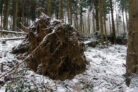
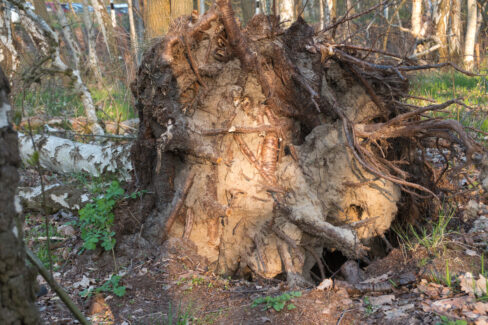
Because shallow-rooted trees don’t have a deep anchor, high winds can occasionally tip them over. To keep your birch standing tall, it needs to develop a strong, stable root foundation. This only happens if it isn’t cramped by other trees competing for that topsoil. To play it safe and minimize any potential storm damage, follow these guidelines:
- Stake young trees to a sturdy post until they are established.
- Keep a safe distance from playgrounds, driveways, and power lines.
- Avoid planting them directly over patios or high-traffic seating areas.
Pro Tip:
Want to dive deeper into the world of these beautiful trees? Check out our Birch Tree Profile for more details on their flowers, leaves, and seeds.