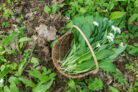
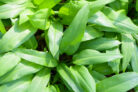
Every year like clockwork, poison control centers see a spike in calls during the spring. Why? Because foragers heading out to find wild garlic (also known as ramps or ramsons) end up with a nasty case of stomach pain or worse. The culprit is usually a case of mistaken identity—specifically, confusing wild garlic with its toxic look-alikes, including the Cuckoo-pint or Lords-and-Ladies (Arum maculatum). Here’s how you can tell these two apart so your spring pesto stays delicious and safe.
How can you tell the difference between Arum and Wild Garlic?
The biggest risk for confusion happens when the plants are still young. Once they mature, they look quite different, but early in the season, you have to look closely. Pay special attention to the leaf veins: Wild garlic has parallel veins (running straight from base to tip), while Arum leaves have irregular, net-like veins. As Arum leaves get older, they develop a distinct arrowhead shape, making them much easier to spot.
What are the specific traits of Arum?
The Arum plant has a few “tells” that will help you keep it out of your harvest basket:
- Broader leaves
- Visible, net-like leaf veins
- The underside of the leaf is noticeably lighter than the top
Young Arum leaves can look a lot like wild garlic, especially since they love to grow in the same damp, shady spots. However, even when they’re small, Arum leaves are usually a bit wider. Later on, they develop those classic dark spots and the arrowhead shape. Arum blooms between April and May, usually a bit earlier than wild garlic. Its flowers are unique—a central spike (spadix) wrapped in a greenish, leaf-like hood (spathe). Underground, the Arum grows from a walnut-sized tuber.
How do you identify Wild Garlic?
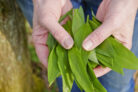
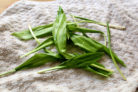
On the flip side, here is what you’re actually looking for in true wild garlic:
- Narrow, slender leaves
- Parallel veins that are hard to see
- A very distinct midrib (the center vein)
- A three-sided (triangular) leaf stalk
- That unmistakable, pungent garlic smell
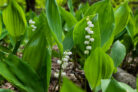
The root of wild garlic is a very slim, elongated bulb. Once the plants start to bloom, the difference is even more obvious. Wild garlic flowers usually pop up between late April and early May. They are small, white, and star-shaped, growing in round clusters of up to 20 blossoms. Checking the flowers is also a great way to make sure you haven’t accidentally picked Lily of the Valley, which is another toxic look-alike.
What happens if you accidentally eat Arum leaves?
The Cuckoo-pint (Arum maculatum) is absolutely not edible. Every single part of the plant is highly toxic. It contains a cocktail of nasty stuff like cyanogenic glycosides, saponins, and aroin. If ingested, you might experience:
- Severe stomach and intestinal issues
- Nausea, vomiting, diarrhea, and cramping
- Dizziness and circulation problems
- In rare, extreme cases, a coma
The toxins in Arum are also very irritating to mucous membranes. If you eat it, your mouth and throat can swell and become painfully inflamed, often accompanied by a burning sensation. If you suspect someone has eaten this plant, call a doctor or Poison Control immediately.
Quick Tip: Are there other look-alikes to watch out for?
Always be extra careful when foraging! Wild garlic can also be confused with Lily of the Valley or the deadly Meadow Saffron (Autumn Crocus). It’s a great idea to study the differences thoroughly and bring a high-quality field guide with clear photos along on your hike. Happy (and safe) foraging!