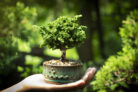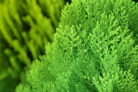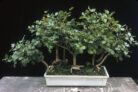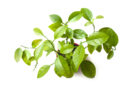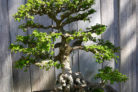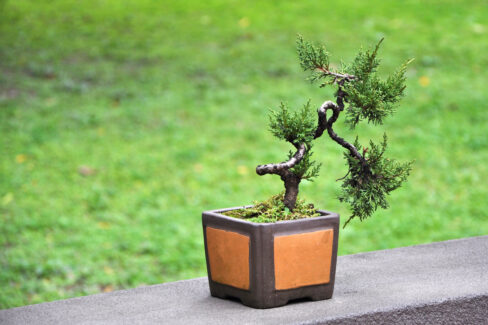
Cypress trees are famous for being fast-growing, hardy giants. On the other hand, a bonsai is supposed to stay a tiny, delicate miniature. At first glance, those two things don’t seem to go together at all! But believe it or not, the cypress is actually a fantastic candidate for bonsai life. Here’s the inside scoop on how to grow your own decorative mini-masterpiece.
Choosing the Right Cypress Variety
If you’re buying a bonsai that’s already been trained, feel free to just pick the one that catches your eye. But if you’re planning on training the tree yourself, you’ll want to start with a variety that is naturally slender and a bit slower on the uptake. Great options include the Goldcrest (Lemon Cypress), Monterey Cypress, Arizona Cypress, or the stunning Blue Arizona Cypress. To get started, make sure you pick out a small, relatively shallow planting container.
Training and Pruning Your Bonsai
It is definitely worth diving into a few books on the art of bonsai training to get the hang of it. Cypress trees are wonderful because they are quite flexible and can be shaped in many different ways. The most popular look is a “cloud-like” crown. To get that perfect shape, many gardeners use templates or wire mesh guides. Once you’ve established the main shape, you’ll need to prune regularly to keep it looking sharp.
- Minor maintenance trims can be done anytime.
- Use wire to gently guide individual branches into the right position as needed.
- Save the heavy pruning for just before or just after the main growing season.
- Always remove or shorten any diseased or awkward-looking branches as they appear.
Finding the Perfect Spot
You can keep your cypress bonsai indoors as a houseplant all year round. However, these little guys really thrive if they get to spend the summer outdoors in a bright spot with indirect sunlight (avoid harsh, direct midday sun). Keep in mind that when it’s in a pot, this bonsai is not winter-hardy. For the cold months, you’ll need to move it to a bright, protected spot that stays between 40°F and 60°F (5 to 15 °C).
Maximum Care for a Mini Tree
Even though it’s small, your mini tree has some specific needs to stay healthy:
- Water it as soon as the top layer of soil feels dry.
- Water in small stages, waiting a moment between pours, until the soil is completely saturated.
- This method helps you avoid the dreaded standing water (root rot).
- Scale back the watering during the winter.
- Use a specialized bonsai fertilizer to feed your tree.
- From April through September, fertilize every two weeks.
- In the winter, once a month is plenty.
- Repot your tree every 2 to 3 years in March.
Pro Tip:
When you repot, give the roots a good trim. This encourages the bonsai to develop a thicker, more impressive trunk instead of trying to shoot up toward the ceiling!