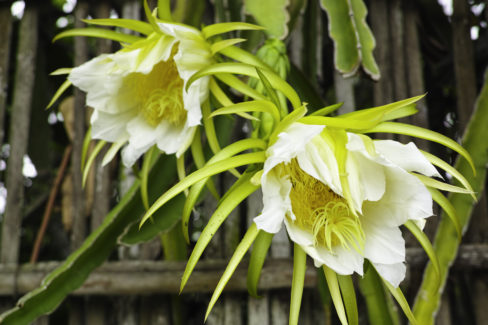
The dragon fruit belongs to the cactus family, and its flowers look exactly like what you’d expect from a desert beauty. They are absolute showstoppers in the garden during the summer months—definitely a “wow” moment for any plant parent!
Flower Shape and Bloom
A dragon fruit bloom is a stunning creamy white and can reach a massive diameter of up to 12 inches. With flowers that big, it’s no surprise that the ripe fruits can weigh over a pound! If you look closely at the bloom, you’ll notice a huge cluster of delicate stamens.
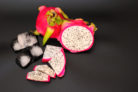
If you’ve ever sliced into a ripe dragon fruit, you know it’s packed with tiny black seeds. Each one of those seeds comes from a successfully fertilized stamen. If a stamen doesn’t get pollinated, it won’t produce a seed and will simply wither away.
Here’s the tricky part: the window for pollination is tiny because these flowers only bloom for a single night. To get fruit, you usually need a second plant that isn’t a genetic clone of the first. Plus, the specific insects that naturally pollinate them aren’t found everywhere, so if you’re growing them at home, you’ll likely need to step in and do some hand-pollination.
Harvesting Ripe Fruit
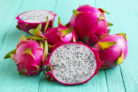
If luck is on your side and pollination is a success, you’ll eventually see fruit starting to form. You’ll know you have a ripe dragon fruit when the skin has turned completely pink. Pro tip: let the fruit hang on the plant for a few extra days after it turns color. This helps it reach peak ripeness and develop that full, sweet tropical flavor we all love.
When you’re ready to harvest, gently clip the fruit from the plant. Even though the skin feels relatively thick and tough, try not to squeeze too hard—you don’t want to bruise the delicious flesh inside!
Storing Your Dragon Fruit
Because dragon fruit has such a high water content, it doesn’t stay fresh for very long once it’s fully ripe. Whatever you do, try to keep them out of the fridge if possible, as the intense cold can dull the flavor. Like most exotic fruits, they prefer a “cool but not cold” spot—ideally somewhere just above 50°F.
You can keep them on your kitchen counter for a short time, but they’re best enjoyed sooner rather than later. The easiest way to eat them? Just slice it in half and scoop the flesh out with a spoon! Of course, you can also dice it up for fruit salads or use it as a vibrant topping for various desserts.