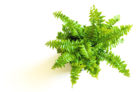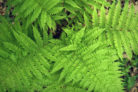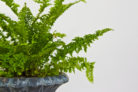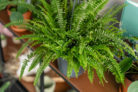
Ferns are some of the oldest plants on the planet, and their ancient roots mean they have a pretty unique way of reproducing. Unlike most of the plants in your garden, ferns don’t use seeds at all. That’s why you’ll never find a packet of “fern seeds” at your local garden center!
Reproduction via Spores
Since ferns don’t produce seeds, they don’t grow flowers or fruit, either. You might see the Royal Fern and think it’s blooming, but those flower-like structures are actually clusters of spore capsules. These capsules come in all sorts of shapes and sizes depending on the variety, which actually makes them a great tool for identifying different fern species.
Controlling Fern Spread: Timing is Everything
Knowing that ferns reproduce via spores is super important if you’re trying to get rid of ferns in your yard. With most garden plants, you have until the end of the blooming season to stop them from spreading. Ferns are a different story—they start developing those spore capsules early in the spring. Plus, many species spread underground through runners (rhizomes) that can pop up just about anywhere. If you want to keep them in check, you’ve got to be quick and decisive!
The “Flowering Fern” Isn’t Actually a Fern
One quick heads-up: if you see something labeled as a “flowering fern” at a nursery, it’s not a true fern in the biological sense. Usually, these are Gloxinias. They look a lot like ferns because of their leafy fronds, but they are definitely their own thing. Here are a few ways to spot a Gloxinia:
- They bloom in the spring or summer.
- They produce pinkish-yellow flowers.
- Like ferns, they love shady or partially shady spots.