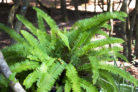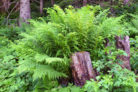
When most of us think about plants multiplying, we usually picture seeds developing inside flowers or fruits. But ferns are a bit of a “throwback” in the plant world. As one of the oldest plant groups on Earth, they don’t bother with flowers or fruit at all. Instead, ferns have a unique way of reproducing: they use spores.
A Closer Look at Fern Spores
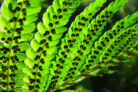
If you flip over a fern frond, you’ll likely see tiny clusters on the underside. These are the spore capsules (or sporangia), and they come in all sorts of shapes and sizes depending on the variety. With around 17,000 known species worldwide, there’s a lot of diversity! Most of these capsules look like tiny dots or lines, but the Royal Fern is a bit of an overachiever. Its spore clusters are so dense they actually resemble flowers.
How the Magic Happens
The reproduction process kicks into gear once those capsules mature. They eventually dry out and pop open, releasing a cloud of microscopic spores into the air. Nature relies on the wind to do the heavy lifting and carry them to new locations. To give you an idea of why ferns can take over an area so quickly: a single capsule can hold up to 500 spores!
However, they are a bit picky about where they land. For a spore to actually germinate, it needs a spot that is consistently damp and shady. Even then, it’s a slow process. It takes about three months just for the initial growth (called a prothallus) to appear, and you won’t see an actual fern plant for about a year.
Spreading Underground
Spores aren’t the only trick ferns have up their sleeves. Many species also spread through underground runners (rhizomes) that send up new shoots nearby. This double-whammy of spores and runners is exactly why it can be such a headache if a fern settles somewhere you don’t want it and you’re trying to get rid of it.
To wrap it up, here’s the quick cheat sheet on how ferns reproduce:
- They use spores instead of seeds.
- These spores are distributed by the wind.
- Many species also spread aggressively through underground runners.