Succulents are some of the most easygoing green roommates you can have. They’re famous for thriving on neglect, getting by with very little water and even fewer nutrients. That said, if you want them to really pop, a little bit of plant food at the right time goes a long way. Here’s the lowdown on how to fertilize your succulents like a pro.
Feeding Your Succulents: Why Standard Fertilizer Isn’t the Best Choice
Since succulents are built for lean environments, they can get overwhelmed by the high nitrogen (NPK) levels found in your average all-purpose potting fertilizer. Giving them too much of a good thing leads to “leggy” or bloated growth that’s actually quite weak. In the worst-case scenario, overfeeding can even prevent your plants from blooming next season.
Pro Tip: Always reach for a specialized succulent fertilizer. You’ll often find these labeled as “Cactus Food” at the garden center—that’s exactly what you need.
How to Fertilize Like a Pro: A Step-by-Step Guide
These (sub)tropical beauties don’t need a buffet all year round. You only want to supplement their diet during their active growing and flowering seasons. When winter rolls around and your plants go dormant, put the fertilizer away entirely. During the summer months, here’s your game plan:
- Between May and September, mix a small amount of liquid cactus fertilizer into soft water (rainwater is great if you have it!).
- A good rule of thumb is to add about one milliliter of fertilizer per liter of water every second time you water.
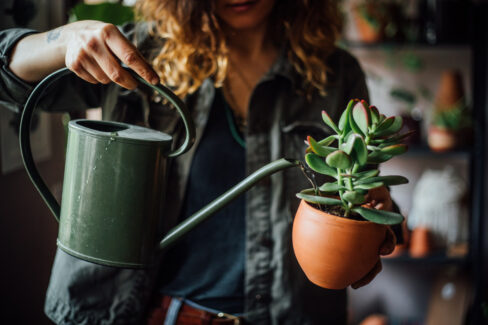
- You can pour this nutrient mix directly onto the soil or even over the stems and leaves.
- It’s a good idea to water with a little clear water both before and after applying the fertilizer to help it settle.
Interestingly, “overhead watering” is actually okay when fertilizing succulents. Unlike many other houseplants, succulents have a tough outer skin (epidermis) that allows them to soak up nutrients through their foliage just as well as through their roots.
Boosting Your Outdoor Succulents
If you’re growing hardy varieties outside in the garden, they usually have plenty of access to minerals in the soil and don’t require much extra help.
However, if you want to give them a little jumpstart for better growth and more vibrant flowers, you can try an organic “starter feeding” between April and May. You can use liquid cactus food or work a little acidic leaf compost into the soil around the base of the plant.
Pro Tip: If you notice the leaves getting soft, don’t assume it’s a nutrient deficiency! In the succulent world, soft or shriveled leaves are almost always a sign that your plant is thirsty, not hungry.