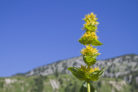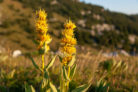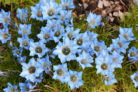
When you think of Gentian, you probably picture those stunning, bright blue trumpet flowers tucked away in the high peaks of the Alps. While there are about 35 different species across Europe, that famous “Blue Gentian” is mostly a garden favorite. If we’re talking about herbal medicine, though, the real star of the show is the Great Yellow Gentian. This tall, impressive plant hides a secret in its roots: a powerhouse of digestive-friendly bitter compounds.
Fun Facts About Yellow Gentian
In the wild, this plant loves alpine meadows, but it’s actually a protected species. That means if you spot one on a hike, you can’t pick the flowers or dig up the roots! It’s a sturdy plant, growing up to five feet tall with a hollow stem and bluish-green, oval leaves. Instead of blue bells, it sports clusters of sunny yellow flowers tucked right where the leaves meet the stem.
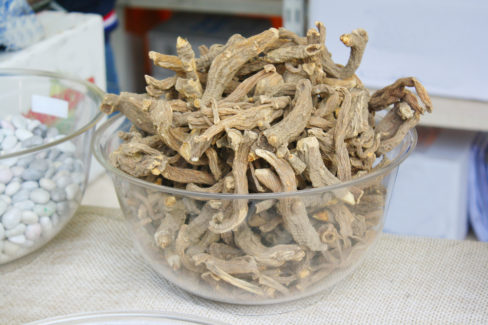
The real magic happens underground. The root of the Yellow Gentian can grow as thick as a person’s arm and reach deep into the soil, keeping the plant nourished for up to 60 years! Those roots are packed with the medicinal properties that have made the plant famous for centuries.
What’s Inside Gentian Root?
Folks have been using Gentian root since the days of Ancient Rome and the Middle Ages. Monks used to swear by it for soothing tummy troubles. Today, we know exactly what makes it work so well:
- Gentiopicroside and Amarogentin: These are the “bitters” that do the heavy lifting.
- Xanthones: These give the plant its yellow pigment.
- Sugars: Natural glucose and fructose.
- Essential oils.
How to Use the Root
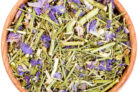
Once the root is dried and chopped up, it can be used in all sorts of ways. Depending on what you’re looking for, you’ll usually find it as:
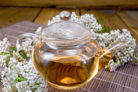
- Herbal teas
- Decoctions (simmered extracts)
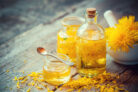
- Tinctures
- Liqueurs
- Schnapps (the classic European way!)
The Benefits of Gentian Root
Whether you’re sipping a tea or a tincture, Gentian is the go-to for loss of appetite or general indigestion. Those bitter compounds kickstart your system by:
- Stimulating your taste buds to produce more saliva and stomach acid.
- Increasing the production of gastrin (a digestive hormone).
- Boosting bile production.
- Revving up your appetite and smoothing out the digestion process.
That’s exactly why a little glass of Gentian schnapps is so popular as an *aperitif* before dinner or a *digestif* afterward. Just a heads-up, though: Gentian isn’t for everyone. If you struggle with stomach ulcers or a very sensitive stomach, it’s best to skip this one.
Gentian Schnapps: A Timeless Tradition
Using Gentian spirits to help with digestion is a tradition that goes back to the Middle Ages, originally perfected by farmers and monks. If you want to talk history, look no further than the Grassl distillery in Berchtesgaden. They are the oldest Gentian distillery in Germany and have been crafting this herbal elixir since 1602!