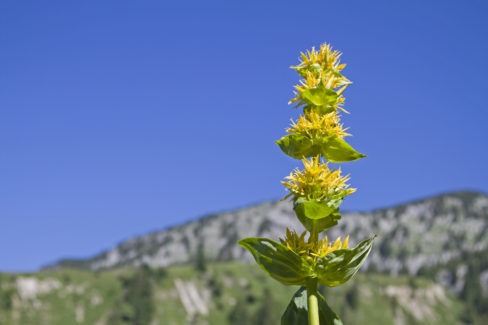
In the world of gentians, the Great Yellow Gentian is definitely the standout of the family. Like its cousins, it calls the Alps home and is a protected species, which means picking it in the wild is a big no-no. To get that famous healing power or to craft that classic root schnapps, gardeners and herbalists rely on specially cultivated plants. If you’re out hiking, be careful: the Yellow Gentian has a “twin” called White False Hellebore, and mistaking the two can be a dangerous mistake.
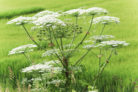
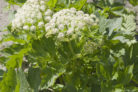
White False Hellebore (Veratrum album)
This plant is super common in the Alps and isn’t protected like the gentian. But here’s the catch: unlike the Yellow Gentian, False Hellebore is highly toxic. It’s packed with alkaloids in every single part of the plant. You’ll usually find it in mountain meadows, marshy areas, or high-altitude fields across the Alps and Eastern Europe. It’s a fan of damp soil that’s rich in nitrogen and lime.
What to Look For
There are about 50 different species of False Hellebore out there. You can spot this particular one by these features:
- A sturdy, hollow stem.
- It can tower up to about 6 feet (180 cm) tall.
- Gray-green leaves that grow in an alternating pattern.
- Large leaves, roughly 14 inches long and 8 inches wide.
- A fuzzy or hairy underside on the leaves.
- An oval, narrow shape with distinct longitudinal folds (like a fan).
- A strong, unpleasant odor.
- Small, white, short-stemmed flowers bunched in dense clusters.
- Blooms between June and August.
- A very pushy, heavy scent.
- Warning: Highly toxic to both humans and animals due to nerve toxins like germerine and protoveratrine.
Great Yellow Gentian (Gentiana lutea)
This is another classic Alpine plant, but this one is a celebrated medicinal herb and is strictly protected in the wild. Here’s how to identify it:
- Grows up to about 5 feet (150 cm) tall.
- Gray-green, elliptical leaves that come to a point.
- The bottom leaves grow in a rosette without stems.
- The leaves on the stalk grow in “cross-opposite” pairs (facing each other).
- Leaves are about 12 inches long and 6 inches wide.
- Bright yellow flowers tucked into the leaf axils, usually in bunches of 3 to 10.
- Blooms from June to August.
- A mild, slightly sweet, and pleasant scent.
- Famous as a remedy for GI issues, loss of appetite, and digestion.
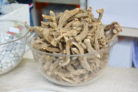
- The rootstock is the star ingredient for tinctures, liqueurs, and spirits.
How to Tell Them Apart
At first glance, these two look a lot alike, which is where the trouble starts. Both have arching veins and a similar blue-gray tint to their foliage. The real secret is in the leaf arrangement: False Hellebore leaves grow in a three-ranked alternating pattern, while Yellow Gentian leaves grow in opposite pairs that cross each other. This is the best way to tell them apart when they aren’t in bloom. Once they flower, it’s much easier—False Hellebore has white to greenish blossoms, while the Yellow Gentian shows off those unmistakable, vibrant yellow flower clusters.