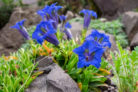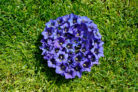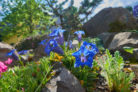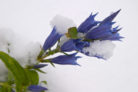
The Gentian family is a massive group with about 400 species worldwide, 35 of which call Europe home. These hardy perennials range from tiny ground-huggers to tall, stately plants, and they’re famous for thriving in the rugged, sparse conditions of high mountain ranges. Because they’re so diverse, their looks, bloom times, and “happy places” in the garden can vary quite a bit.
The Gentian Family
With so many family members, we can only cover the greatest hits here! For most home gardeners, the stemless and low-growing varieties are the way to go—they’re generally easy to care for and look stunning. Just a heads-up: before you dig a hole, check your soil pH. Some Gentians crave lime-rich (alkaline) soil, while others will only thrive if the soil is acidic.
The Basics
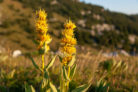
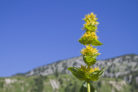
While many of us grow Gentians as ornamental eye candy, some species are actually used for herbal medicine or even to craft specialty schnapps. Most grow as long-living perennials. In the “stemless” varieties, you’ll see a flat rosette of leaves on the ground with a single, trumpet-shaped flower popping out. Fun fact: these flowers often close up tight when it’s cloudy or raining! On the taller varieties, like the Yellow Gentian, the flowers grow in clusters along the stem. Once they’re done blooming, they produce seed capsules that rely on the wind to spread the love around your garden.
The Stemless Gentians
In the gardening world, the two big players are Clusius’s Gentian and Koch’s Gentian. They look like twins, but they have very different tastes in “real estate.”
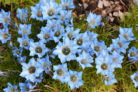
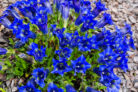
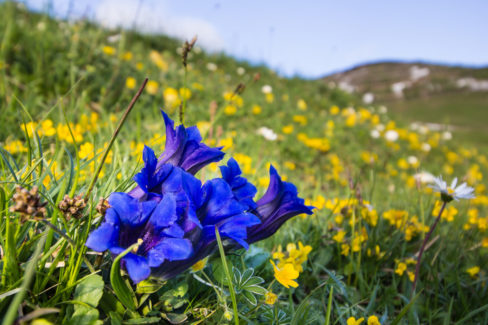
Clusius’s Gentian (the classic Alpine Gentian) boasts a deep, intense blue trumpet flower and absolutely requires lime in the soil. It’s a perfect candidate for a rock garden. In the wild, you’ll find it in dry, nutrient-poor limestone meadows. Then there’s Koch’s Gentian (Broad-leaved Gentian). It also has blue flowers, but if you peek inside, you’ll see green spots that make the blue look a little less vivid than its cousin. This one is a fan of acidic, moist soil—think boggy or peaty areas.
Other Popular Gentian Varieties
If you’re looking to add more variety to your landscape, here are a few more standouts:
- Spring Gentian: A stemless variety with bright blue flowers starting in March; loves lime-rich soil.
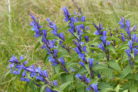
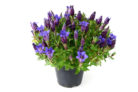
- Autumn Gentian: Features blue trumpets from May all the way to December; can reach about 24 inches tall and prefers sandy soil.
- Yellow Gentian: A giant that grows up to 5 feet tall! It blooms from June to August, loves lime, and is the go-to species for medicinal uses and schnapps.
- White Gentian: A stemless beauty with snowy white flowers that bloom in July and August.
- Bavarian Gentian: A dainty choice that grows about 6 inches tall with delicate blue flowers and no leaf rosette.
- Pannonian Gentian (Eastern Alpine Gentian): A medicinal plant reaching about 24 inches, featuring unique purple-spotted trumpets from July to September.