If you’re looking to grow a walnut tree, grafting (also known as “top-working”) is one way to go. I’ll be honest with you: it’s definitely the most labor-intensive way to propagate a tree, but it comes with some pretty awesome perks. Let’s break down how to do it step-by-step.
Different Ways to Propagate a Walnut Tree
Grafting walnut trees isn’t exactly the most common method for home gardeners. Most folks tend to go the easier route by propagating them through:
- Cuttings
- Or simply growing them from actual walnuts (seeds).
Why Bother with Grafting?
So, why take the extra effort to graft? Well, there are a few big reasons why it’s worth the work:
- You’ll get your first harvest much sooner—usually in just about four years.
- The quality of the nuts is typically much higher.
- Grafted trees tend to be heartier and more resistant to pests and diseases.
Getting the Timing Right
For the best results, you’ll want to use a “rootstock” (the base plant) that is about two years old. Any younger and it’s not quite sturdy enough; any older and it might not “take” the graft as well. Pro tip: The best time to start this process is actually in December.
Prepping for the Graft
Before you start playing surgeon with your tree, you’ve got to get everything ready:
- Dig up your young walnut tree and prune it back until it’s only about 6 inches (15 cm) tall.
- Pot it up in some good garden soil and cover it with a clear plastic bag to keep the humidity high.
- Keep the pot in a bright spot that stays around 68°F (20°C).
- Your walnut tree is ready for grafting once you see the first buds appearing, which usually takes two to four weeks.
How to Graft Your Walnut Tree
Once your base is ready, here is how you perform the actual graft:
- Take a “scion” (a cutting from the variety you want to grow). This should be a shoot from the previous year, about 20 inches (50 cm) long. Cut the end at a 30-degree angle.
- Trim that scion down to about 4 inches (10 cm) long, making sure you keep that 30-degree angle at the base.
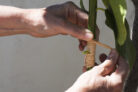
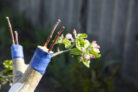
- Line up the cut surfaces of the scion and the rootstock perfectly. Secure them tightly with some grafting twine or tape, and seal the “wound” with a bit of liquid grafting wax to keep it airtight.
- Put your newly grafted tree back in its bright, warm spot.
- Once you see the first leaves sprouting—usually after two or three months—you can finally take the plastic cover off. Happy growing!