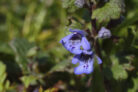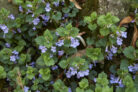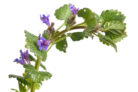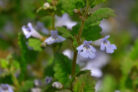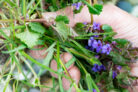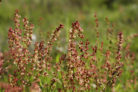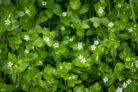
Ground ivy, also known as Creeping Charlie, features those classic tubular flowers typical of the mint family. These little blooms transform what might otherwise be a low-key groundcover into a really attractive plant that’s a big hit in the garden. Bees absolutely love visiting them, and for us gardeners, there are plenty of reasons to look forward to their blooming season.
Ground Ivy Buds Pop Early in Spring
If you’re out for a walk in the wild (or just checking your backyard) in April, you’re almost guaranteed to spot some flowering ground ivy. In warmer areas, those first buds can even start popping as early as March. The peak blooming season for this edible and medicinal plant runs through May, but it doesn’t stop there—you’ll often see a steady stream of flowers continuing through June and July.
What the Flowers Look Like
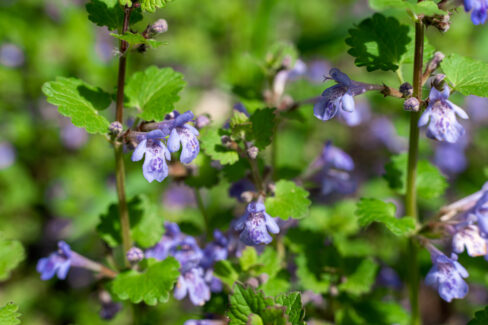
As a member of the Lamiaceae family, ground ivy (scientifically known as *Glechoma hederacea*) follows the standard “mint” blueprint, but with its own unique flair. Here are the key features of the flowers:
- They grow in the leaf axils (where the leaf meets the stem).
- They usually appear in clusters of two to five.
- The flowers are small, roughly 1/2 to 3/4 of an inch.
- The calyx (the base of the flower) is tube- or bell-shaped.
- The petals are typically a lovely blue-violet, though you’ll occasionally see white or pink ones.
- The “lower lip” of the flower is decorated with tiny reddish spots.
Pro Tip:
Want to dive deeper into this wild and cultivated plant? We’ve rounded up all the essential facts in our Ground Ivy Profile.
Bloom Time is Harvest Time
Yes, ground ivy is edible! People start gathering the leaves in early spring to use as a savory herb in various recipes. The best part? The harvest doesn’t stop once the flowers appear. In fact, the flowers themselves are edible too. While the leaves have a bold, aromatic, and slightly bitter flavor (so use them sparingly!), the blossoms have a delicate, sweet note. Because of their gorgeous color, they make a fantastic edible garnish. Plus, when you’re foraging, there’s very little risk of confusing it with anything toxic.
Ground Ivy in Your Garden
Many gardeners struggle to find plants that will actually bloom in those tricky, damp, shady corners. Ground ivy makes an excellent groundcover for exactly those spots. Just a heads-up, though: don’t underestimate how fast it spreads! Despite its pretty flowers and culinary uses, its enthusiastic growth is exactly why some people consider it a weed and try to get rid of it.