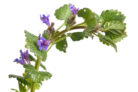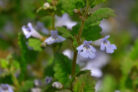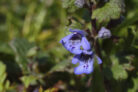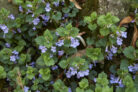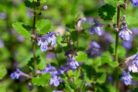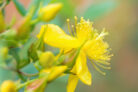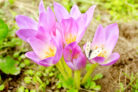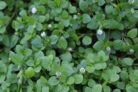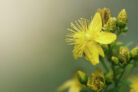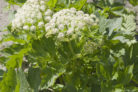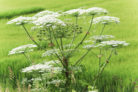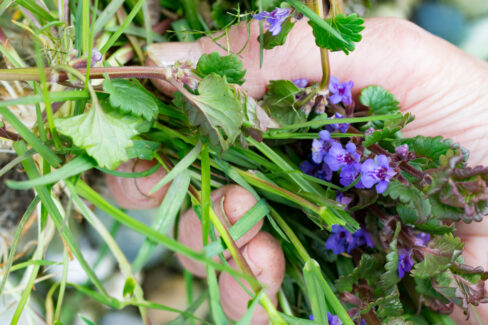
Once you’ve really gotten to know Ground Ivy (also known as Creeping Charlie), you’ll never mistake it for anything else. But until those identifying features become second nature, it’s easy for a few “imposters” to end up in your foraging basket. While some look-alikes are harmless, others can be a bit more dangerous.
Common Look-Alikes in the Wild
In the great outdoors, there are four main plants that often get confused with Ground Ivy:
- Bugleweed
- English Ivy
- Self-heal (Heal-all)
- Red Dead-nettle
Bugleweed and Self-heal
Ground Ivy produces lovely bluish-purple flowers. Both Bugleweed and Self-heal belong to the same mint family (Lamiaceae) and sport flowers in a very similar color palette. However, the risk of a mix-up drops to nearly zero if you look at the details. Bugleweed is generally smaller and has tinier blossoms. Plus, its blooming season starts a bit later than the Ground Ivy flowering period.
Self-heal doesn’t start blooming until June, but it stays showy much longer than Ground Ivy—all the way into October. Its flowers grow in a distinct, upright club-like shape. The leaves are oval-shaped, which is a big giveaway since Ground Ivy has rounder, heart-shaped leaves with scalloped edges.
Mistaking it for Toxic English Ivy
English Ivy has subtle, yellowish-white flowers, so you won’t confuse the two when they are in bloom. However, if you’re a beginner foraging outside of flowering season, you might mistake the foliage. The biggest tell is that English Ivy is a true climber, sending out long vines that can scale trees and walls for yards. Ground Ivy (sometimes confusingly called “Creeping Ivy”) stays much lower to the ground, only occasionally winding upward in shady spots. You definitely want to avoid this mix-up, as English Ivy is quite toxic.
The Edible Dead-nettle
The blossoms of the purple-flowering Dead-nettle look remarkably like Ground Ivy flowers. But take a look at the leaves: Dead-nettle leaves are noticeably pointed. Also, the plant grows upright, while Ground Ivy prefers to creep and crawl along the soil. If you do happen to mix these two up, don’t sweat it! Both wild plants are edible and can be used as culinary ingredients or herbal remedies.
Pro Tip:
If you intentionally plant Ground Ivy in your garden, you won’t have to worry about identification mishaps. Just keep in mind that because it loves to spread, it can quickly turn into a stubborn weed that is tough to get rid of if it gets out of hand!